GISELLE LINDER
From the moment I thought of starting a series showcasing artists on my blog, I knew I wanted Giselle to be my first interview. Poet, actress, and a muse of mine since childhood, I first met her on the internet when we were in our pre-teens and running Lana Del Rey fan accounts–her in Australia, myself in Florida. Somehow, despite the physical distance between us, we were able to create an intimate space online where our poetry could grow. I often refer to her as the Plath to my Sexton–my confessional sister. She is one of the most interesting, inspired people I know, as well as one of the most talented artists I’ve been lucky enough to create with. Her words, both in verse and in conversation, are streams of light. It is my privilege to introduce you all to her.
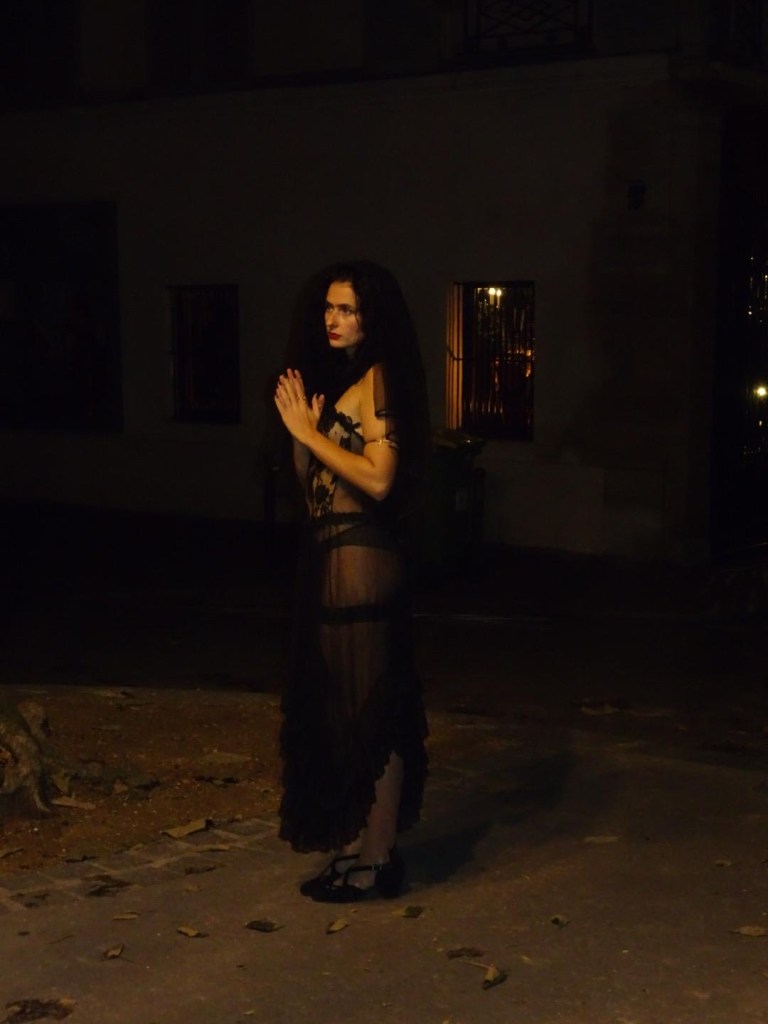
What’s your earliest memory of writing? What felt like the birth of your poetry?
I can’t remember ever not writing; I’ve always been a voracious reader, and of course the two tend to go together. But I think my first specific memory of writing is from when I was maybe seven and was put in an advanced creative writing group at school. I remember writing a story about a girl who went missing, I think she ran
away into a forest. And then when I was about eleven or twelve, I plotted out a big murder mystery series. I don’t dabble in that genre very much anymore, but I’m happy to say I’ve maintained my interest in the macabre well into adulthood.
My poetry was born when I stumbled upon Sylvia Plath’s work when I was thirteen. I was only just beginning to grasp the idea that my father was dead – he died suddenly when I was eight – and I was terribly isolated in the midst of an experience so foreign to most people that age. I was so bitter and sad all the time. Finding out that she had lost her father at the same age made her a guiding light to me. I thought, Here was someone, perhaps the only person, who got it – got it in ways that could be ugly and awful and angry and impolite, rather than attempting to model a mourning that doesn’t make people uncomfortable. I read Electra on Azalea Path and it changed my life. It’s still one of my all-time favorite poems.
What’s your advice for people looking to get into poetry?
Invite yourself to feel everything. Abandon shame, or if you can’t, explore its depths. Read widely, and when you find something that moves you, identify exactly why it moves you. Meet other writers, send each other letters. Befriend stray cats. Sing the praises of poets while they’re still alive. Fall in love with your own perspective. Make muses out of strangers. Never touch ChatGPT. Be intensely introspective. Know when to walk away.
Do you have a favorite poem of yours? Or a favorite line?
In terms of published work, I’d say maybe Same Motel Room, Different Poem, which is in my most recent collection. I definitely think I have stronger and more exciting poems, but I’m very fond of that one. It satisfies me because it captures a very particular moment in time. It’s actually become a semi-ironic poem, because it’s fundamentally about how you can never relive an experience, which is still true, but that poem has become a permanent doorway into that evening for me. My favourite
lines are probably, “It may sing the same refrain, but this isn’t a 16-year-old summer/The world is getting hotter, it seems there’s nowhere left to run/There’s all these things I want that I know I’ll never get/and I am left looking for them in the arms of someone.” It was only ever meant to be a quiet personal favourite, but people have kindly said it resonates with them, so I actually include it in
performance sets quite often.
In terms of unpublished work, I’d say my favourite poem is Paris (France) or Paris (Texas). My favourite lines are, “we find ourselves once again in the sorrow machine asking/whose fault is it this time?/blame is only another symptom of knowing each other fully.” You once said in an interview not to measure poetry by how “good” it is, but rather by how truthful it is, which is advice I adore. Those lines strike me as very truthful.
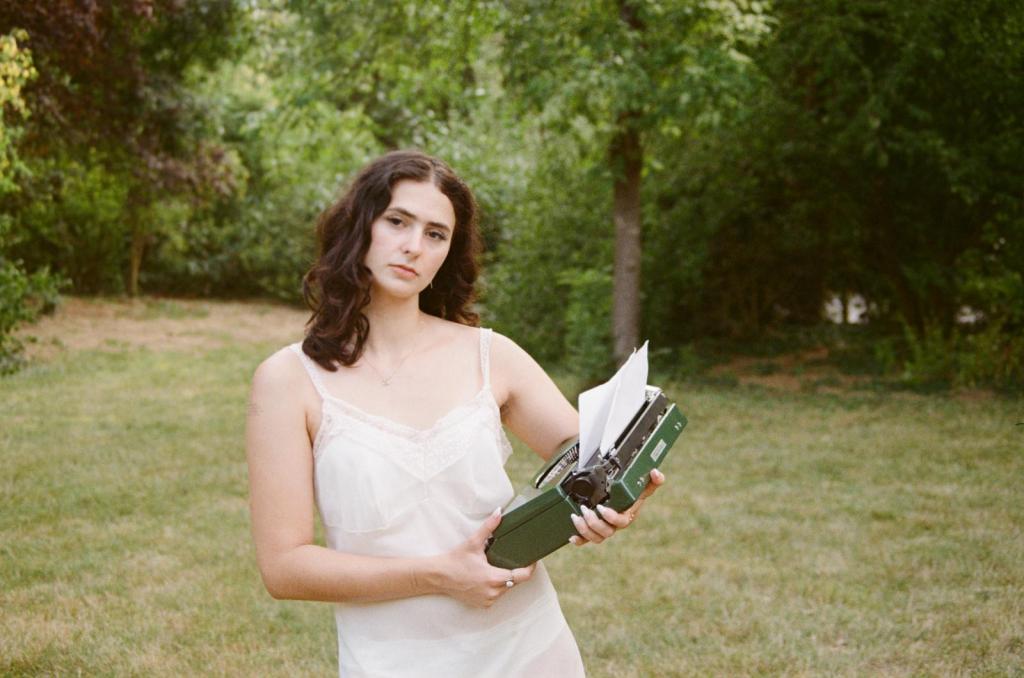
How do poems come to you? How do you string words together?
Slowly, line by line, like water leaking in through a hole in the roof. I rarely seem to find beginnings that way, only middles and endings. I collect slowly for days, weeks, sometimes months. And then when the time is right, I sit down properly with the poem and give it its missing pieces.
You describe your poetry as a world we can step into. What does it feel like, smell like, taste like, look like? What is the general landscape you try to capture with your work?
It’s like checking into the Ritz in Paris under a fake name and imagining love affairs with people you see at the bar nursing overpriced drinks – and not taking any of them up to your room; instead, lying in bed smoking listening to Billie Holiday and wishing it wasn’t so cold outside, and thinking of all the people you’d sleep with and what good conversation you’d make with them if only it was July instead of January.
It’s like pulling up to a motel somewhere in America, so tired you can’t even remember which state you’re in, and trying to air out your 1940s dresses on the bed because they stink of death, popping the pimples on your chin you got from living off of bad food from roadside diners, praying you look glamorous enough from a distance.
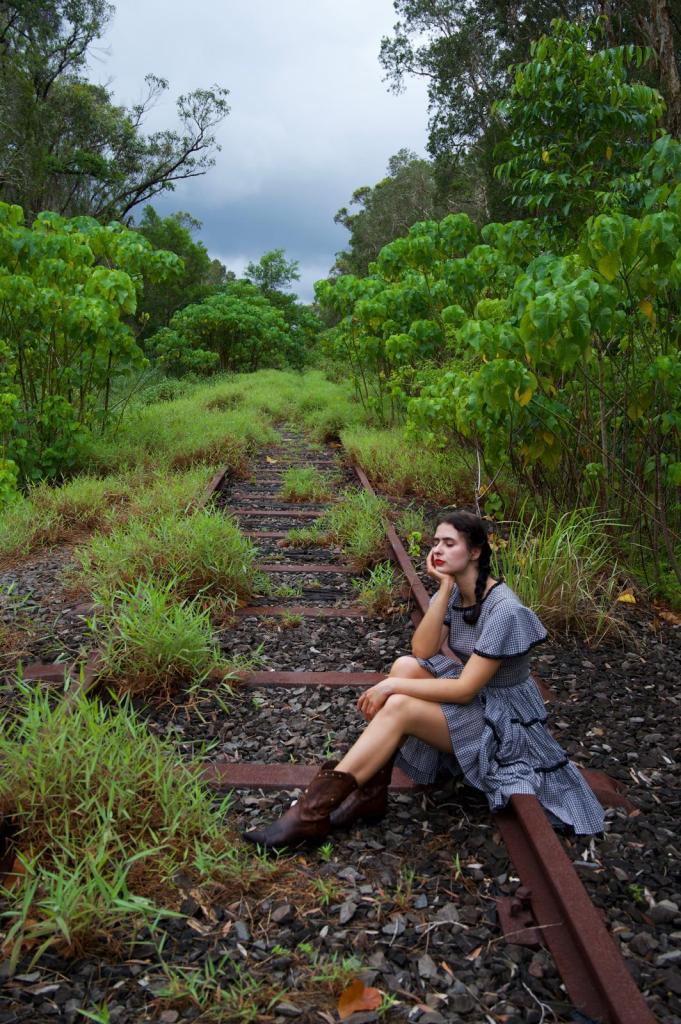
It’s like disappearing into the bush in a white dress à la Picnic at Hanging Rock, leaving someone to find your shoes and wonder what became of you as all the insects sing and the air hangs low with Australian summer heat.
It smells like mothballs, red wine, sweat and exhaust fumes. It tastes like honey, like stomach acid, like a preserved wedding cake. It’s going to the city and missing the country or going to the country and missing the city. It’s being crushed under the weight of desire, it’s recording chronic dissatisfaction. It’s the constant fear of being out on your own while knowing that all you truly want to be is out on your own. In other words, it’s as though you put Audrey Hepburn’s Sabrina in Thelma and Louise.
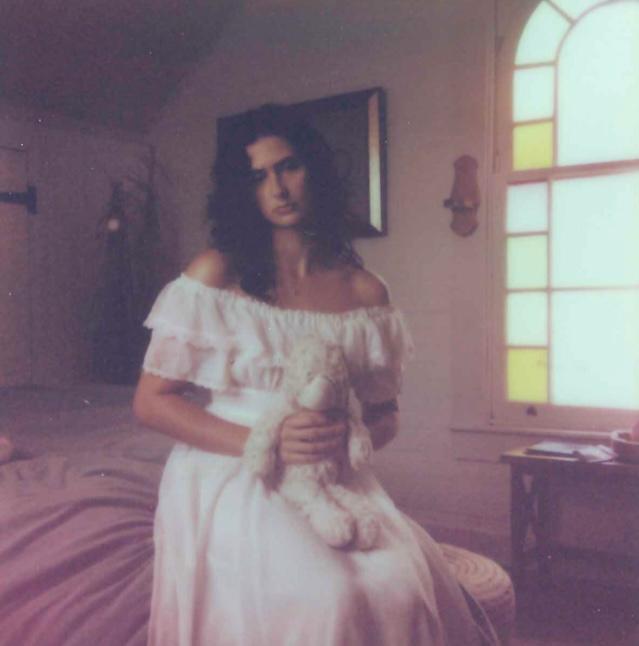
I know you recently started putting some music into your poems, which you already know I love to do as well. How was/is that experience? How has that changed the way you view your poems?
It’s been so exciting to explore something a little different for me. It feels somehow more communal too; a lot of artists I respect and admire have been very generous in their offerings, and have lent me inspiration, or expressed their willingness to collaborate. My heart has been very full lately, everything has felt so natural. So far it’s been relatively informal – I’ve just been experimenting privately or uploading pieces to SoundCloud just to try things – but I’m in the process of creating something more official with my friend Walker who’s a crazy talented musician. I can’t wait to share more of that.
It’s nice to feel that a poem can continue to expand, even if the text doesn’t change. Sometimes publishing a piece has a depressing air of finality to it; getting to continue the work can feel like cracking open a time capsule. And as I know you understand, adding music allows you to further flesh out the world you’ve created. Sometimes it offers you a broader palette.
You perform your poetry quite often as readings. What is it like to share your work so openly primarily with strangers? What’s the best moment/realization you’ve had at these readings?
It usually feels easier to share the work with strangers than with people I know; I rarely have to admit to anything. The only exception to that is probably my friend Malina, who is one of my favourite people in the world and who I share pretty much all my work with, and everything else too. Recently I sat on the floor of her apartment and read her my diary entries from when I solo travelled in America for a month while she sat across from me and painted. Speaking of those solo travels, I think the best moment I had was when I performed with LMNL Arts in New Orleans. I remember sitting at the bar while they were introducing me and getting so anxious that I couldn’t feel my body, and I couldn’t remember how to breathe. I was terrified that if I got up to walk on-stage I’d just fall flat on my face. But the moment I took the mic off the stand, everything immediately slotted into place; it wasn’t that the weight had been lifted, but rather, that it was somehow channelled into a total singularity of focus. It was a beautiful night, I was so moved by the energy the audience brought into the room, which is perhaps what I had been sensing all along. I’ve never felt more like there was so much space in the world for all my intensity. I felt totally free to take up as much space as I wanted. Thinking on it now, it reminds me of a few lines in a Florence and the Machine song in which she exalts the act of performance by exclaiming, “Here I don’t have to be quiet/Here I don’t have to be kind.” It was a real gift. I had a rough time of it last year, and it made me extremely productive but nauseatingly insecure.
I kept trying to hate myself into being something better, and remained somehow surprised that it never seemed to work. I was in a play and would massively spiral out not only after every performance, but even after every rehearsal. The things that happened really broke my confidence. There have been good nights here in Paris too, but for whatever reason, that NOLA performance gave me back something I had been searching for. And it made me want to dig deeper. You could always be more intense.
You are very much a wanderer of countries, spaces, lives. How do different places affect your writing? What’s your favourite place in the world to write in?
I’ve always been fond of art that pays homage to a specific place; a city becoming a character in and of itself, or a poem or song named after a particular street. Munich,
Winter, 1973 (for Y.S.) by James Baldwin comes to mind, which opens by saying, “In a strange house/a strange bed/in a strange town/a very strange me/is waiting for you.” I’m familiar with the concept of the unfamiliar, so this resonates strongly with me. Later in the poem, Baldwin writes, “my father said to me/It is a terrible thing/son/to fall into the hands of the living god.” My poetry often feels tied to physical spaces too, even if it’s not explicitly stated. For instance, I sent you a poem I wrote while I was in Savannah titled The Poem in Which We Do Not Make Love, which I envisioned as being set in a feverish, impossibly scorching combination of New Orleans and Cairo. I always want to translate a specific energy – I think I remember saying to you while we were together in the Tennessee countryside last year that it made me sad to know that no one would be able to stand where I stood in that moment and see that particular green exactly as I did.
And so as a result, I think I’ve spent the last year or however long it’s been since then becoming an unintentional chronicler of that green. The paradox of feeling like you don’t belong anywhere is feeling as though you might belong everywhere. I think there’s an underlying question in a lot of my work which is simply, What did I come here for? My roommate often asks what I’m hoping I’ll find when I speak emphatically of going somewhere without a real reason to do so, which is a great question, but it makes me realise I don’t have a response. It’s the act of searching in and of itself that’s sacred. Most of my writing feels to me as though it’s about the tension between staying and going, the ever-present desire to run away.
Speaking of that tension, my favourite places in the world to write in are hotel/motel rooms; strange in-between spaces. Those are my favourite settings too. When I’m not on the road, I just like to write at home. I’d love to be someone who sets up in a café or a bar but I get distracted and overstimulated too easily. And I’m a total homebody anyway. In that sense, I’m a woman of extremes – I either need to completely lose my head and disappear into spaces where no one knows my name and everything is new and different, or I need to be completely surrounded by what I know, seeing the same few people, going to the same few places I frequent, just generally being a creature of habit.
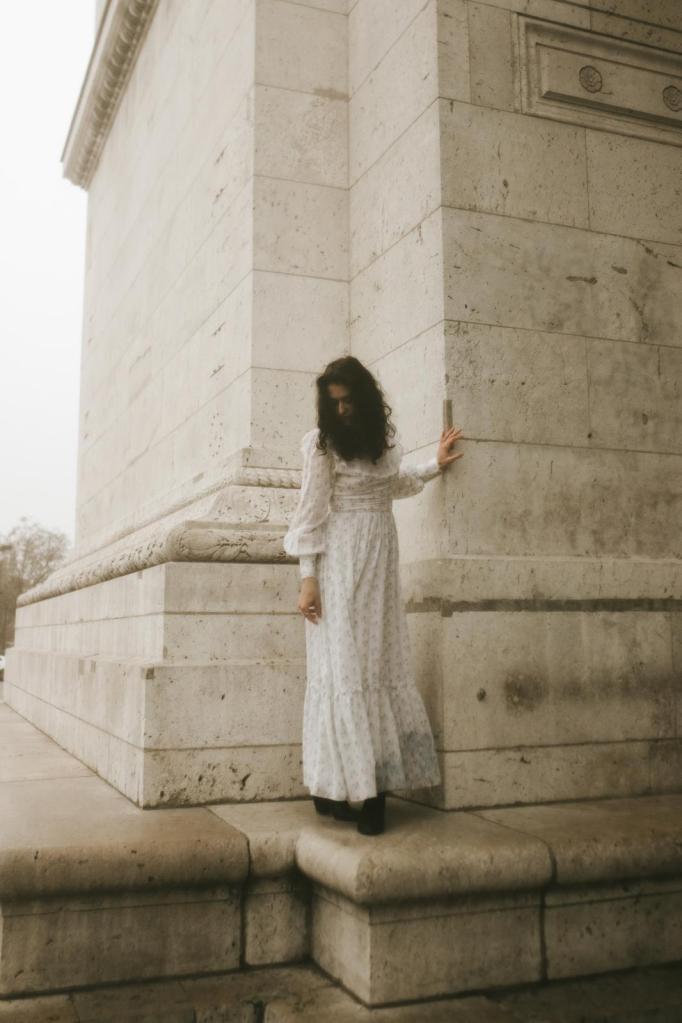
Tell me about how your other passions (fashion, acting, etc) interact with your poetry?
Being an actress, specifically on-stage, is an idea that tends to come up a fair amount in my poetry. The best example I can think of is the poem The Glass Auditorium from my recent collection, which is about being forced to perform until you quite literally fall to pieces – at the start of the poem “with shaking knees/I take the shaken laurel leaves/I take the stage/the triumph is never reached and is always the same”, and at the end “the last of me some torso some legs/parades for a room which hums like
bees/one marionette arm raises after the other/death as the final strip-tease.” It’s natural enough because it’s a part of my life too, but even if it wasn’t, I think it would still show up in the work. Aside from Plath, some of my biggest inspirations when I first started writing poetry were Old Hollywood films and their stars.
Recently too, I’ve been writing a prose poem that might never see the light of day, and it’s sort of about being in a show. I just finished a run of Chekov’s Three Sisters, adapted by Hannah Coyle – I played Irina, the youngest sister – and I’m so happy with how it all went. But obviously I don’t normally write happy poetry, so I’m
writing a frenzied poem about how strange and unwell I felt in the weeks leading up to the show. So for instance, one of the lines talks about how I had this dream before the play opened that every person I’d ever slept with was sitting in the audience and none of them applauded at the end. My love of vintage fashion absolutely permeates my writing as well. It lends itself to wanting to create art that has a sense of something bygone, something nostalgic.
There’s a ghostly quality to old clothes and old photos, or to knowing you’re wearing a dead woman’s shoes. It’s a feeling that’s almost everywhere in Paris too. I hope my words can be infused with some of those same wistful aches.
Write me your ideal epitaph
Let’s go back to where it all started and have something from Electra on Azalea Path
– “It was my love that did us both to death.”

 Steph Bruzon
Leave a reply to Jordan Marcum Cancel reply