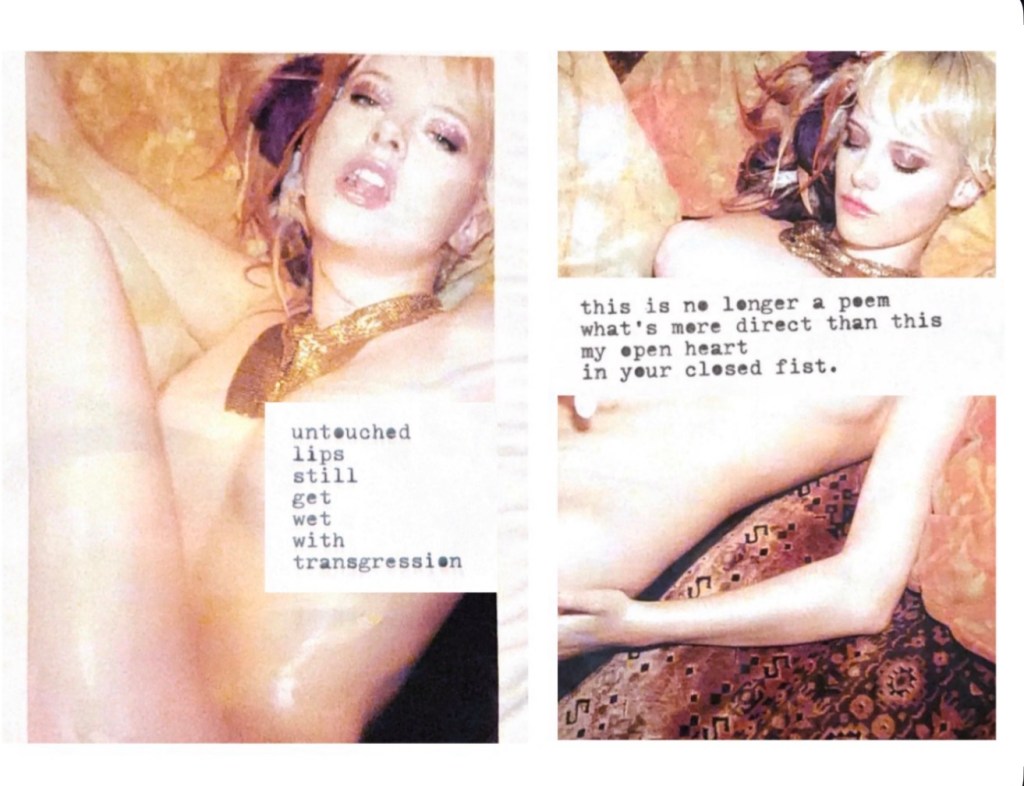
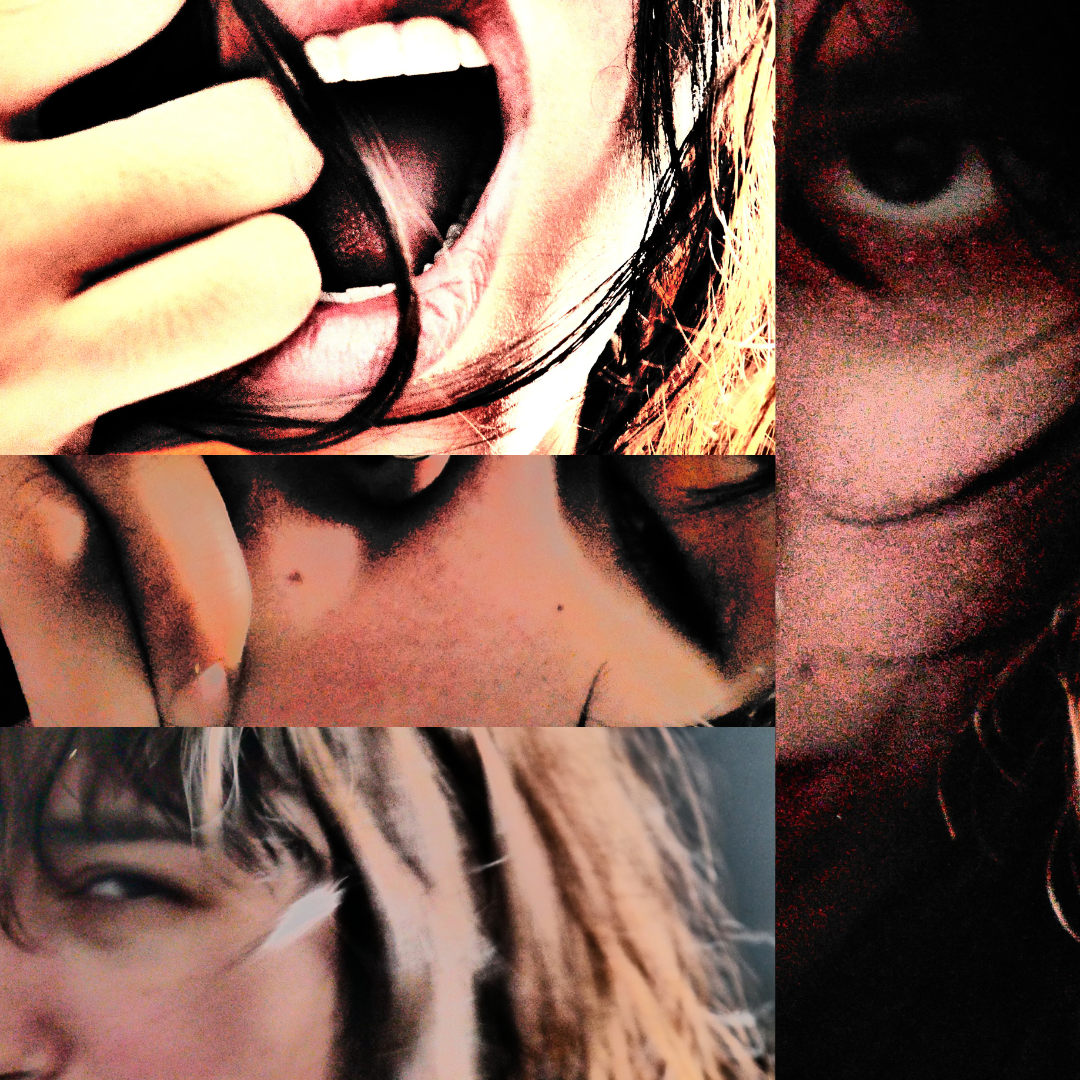
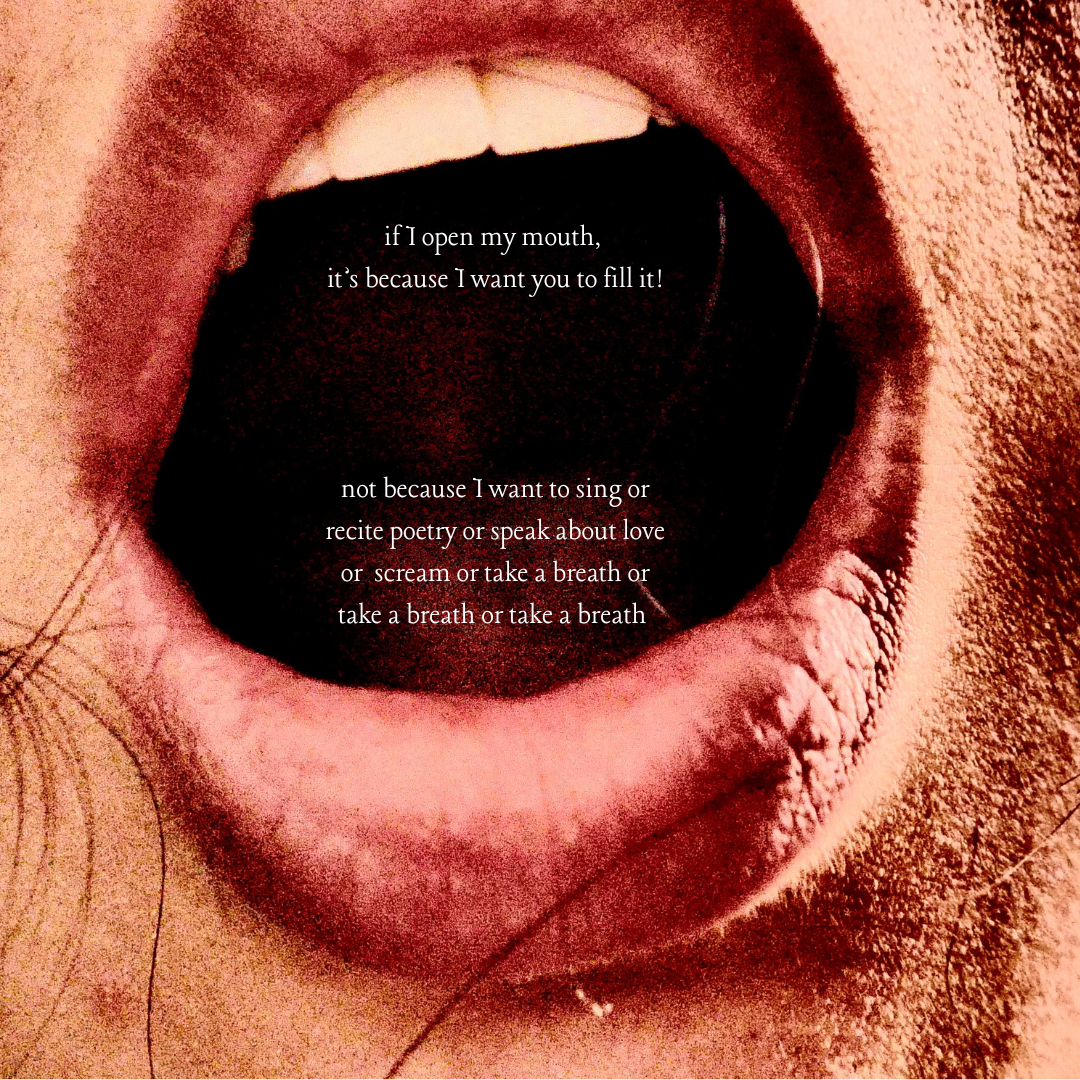
that might work for a woman like me, with a hole where my hole should be.
my matrix loves scrutiny is full of scarcity keeps me in need in need in need
thirty-minute hypnosis to keep asleep until I’ve been splayed and shot.
poor overheated star conjures city conjures mesh skin crashing, crashing, I’ll soon be where you are
to crawl in through your back door— baked you a pie of my lineage, but you want more.
and why am I surprised?
all of my exhibitions do nothing but tease, not who I am but who I am to please stay until you feel it.
your ammonia diaphoresis gives me reason for pause.
please learn how to take my shirt off, even if all you find underneath is flesh, all the flesh there is to get through, and get through, even if you never arrive.
let’s travel, astral, I’ll drive—
from my silk web, fetal position, hands in prayer position under my head to watch love unravel from my fist like grief, uncurable and unsaid.
for only dark do I unpack.
if I killed myself, the band might do better
my halo is a self-imposed guillotine, as guilty as the dream that brought me here and I could be the Jim of the South! c’mon baby light ME on fire baby spare me your mouth
it couldn’t get any better.
(we couldn’t be more destined to destroy it together)
and you couldn’t get much higher.
(couldn’t be more apt to dilute me with desire)
well, it’ll all be forgotten– even what you want.
and what I want?
only the dark to unpack.
to keep confessing while she crawls to me with last night’s dream caught in her hair to tell me that everything was blue and I was there. how she took me in, though so little of what I think or say is true, fear plated in my delay, I sing the all men stray blues and pray that I do not slip away pray that you do not see me now when you are already too late.
I travel, astral— don’t know how to make it back. the wrong arms are chains; I’ll have to wring the dirty water from our brains— love, a thing to be dealt with and won’t work for a woman like me cuts a hole through her poetry so that you might see her gut full of flickering filaments dress me at night— the intentions you saw as inventions of darkness I eat the light feed the light eat the light starve
no light can fill me like you.
the way you sit smitten by your loneliness, stricken by your expensive hunger, while mine is given free—we are place holders the poem is travel, astral— no destination for a woman like me— the poem holds—no place I haven’t left haven’t left haven’t left— no place I won’t go.
and what it is to be free: the entire world spins for me I go by my surname I’m everything you claimed I am and more
I the I the I the if I were you I’d close that door.
no place can hold a woman like me—no poem can tuck my nose in, breathe—I still haven’t left I haven’t left haven’t left you see— but a woman like me has no place no place and because she has no place,
From the moment I thought of starting a series showcasing artists on my blog, I knew I wanted Giselle to be my first interview. Poet, actress, and a muse of mine since childhood, I first met her on the internet when we were in our pre-teens and running Lana Del Rey fan accounts–her in Australia, myself in Florida. Somehow, despite the physical distance between us, we were able to create an intimate space online where our poetry could grow. I often refer to her as the Plath to my Sexton–my confessional sister. She is one of the most interesting, inspired people I know, as well as one of the most talented artists I’ve been lucky enough to create with. Her words, both in verse and in conversation, are streams of light. It is my privilege to introduce you all to her.
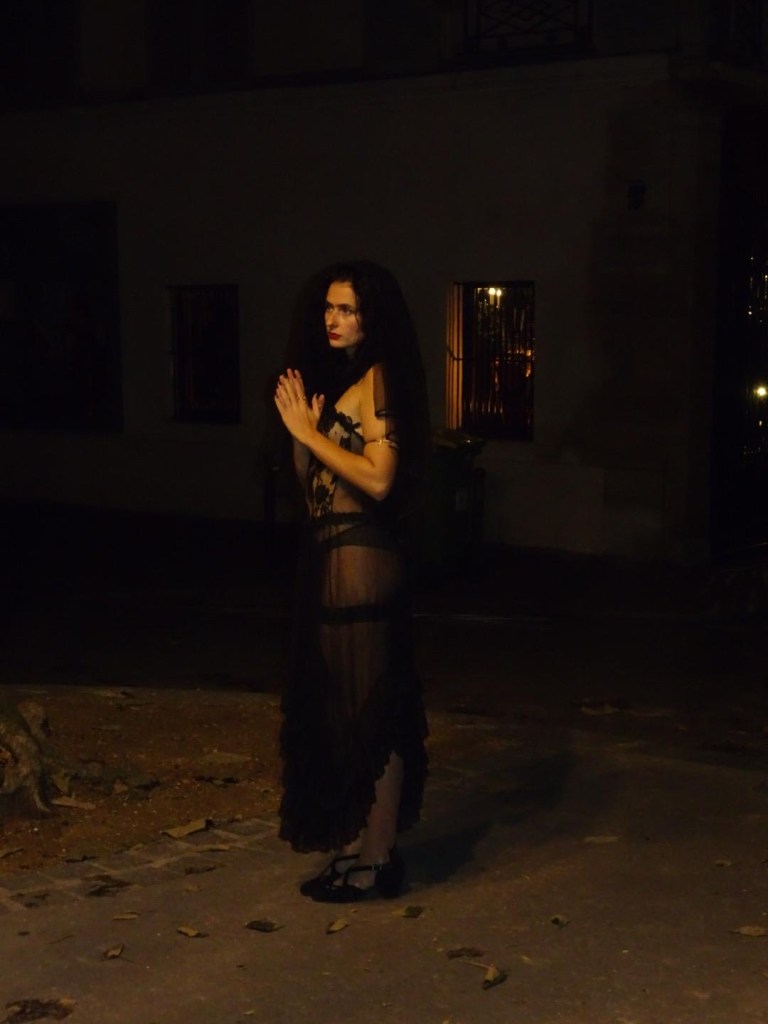
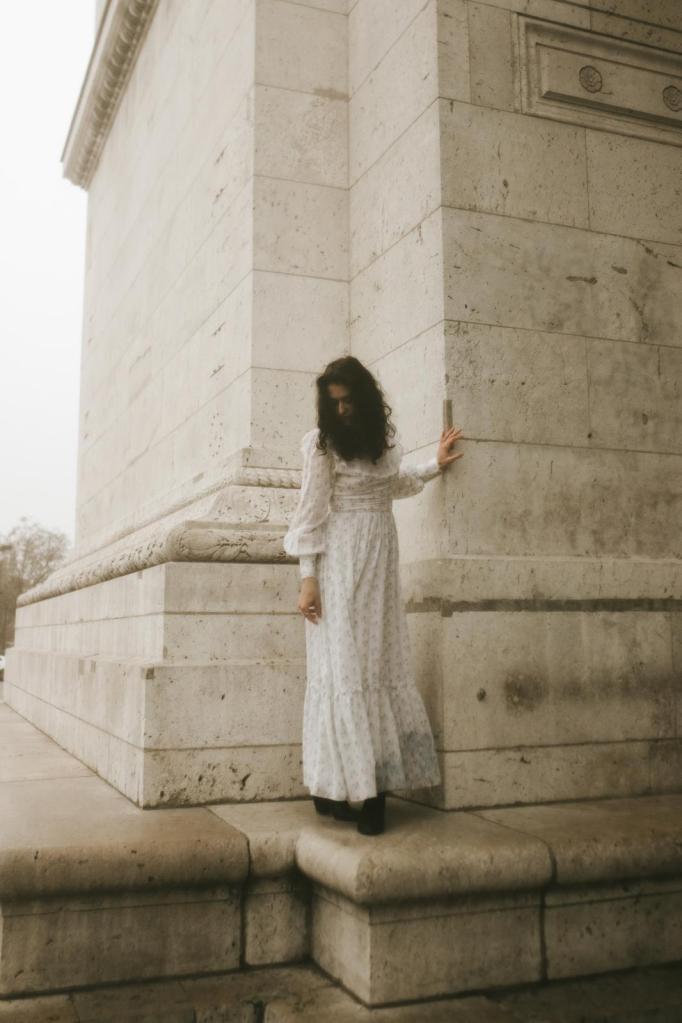
photo by Malina Ghinet
What’s your earliest memory of writing? What felt like the birth of your poetry?
I can’t remember ever not writing; I’ve always been a voracious reader, and of course the two tend to go together. But I think my first specific memory of writing is from when I was maybe seven and was put in an advanced creative writing group at school. I remember writing a story about a girl who went missing, I think she ran away into a forest. And then when I was about eleven or twelve, I plotted out a big murder mystery series. I don’t dabble in that genre very much anymore, but I’m happy to say I’ve maintained my interest in the macabre well into adulthood.
My poetry was born when I stumbled upon Sylvia Plath’s work when I was thirteen. I was only just beginning to grasp the idea that my father was dead – he died suddenly when I was eight – and I was terribly isolated in the midst of an experience so foreign to most people that age. I was so bitter and sad all the time. Finding out that she had lost her father at the same age made her a guiding light to me. I thought, Here was someone, perhaps the only person, who got it – got it in ways that could be ugly and awful and angry and impolite, rather than attempting to model a mourning that doesn’t make people uncomfortable. I read Electra on Azalea Path and it changed my life. It’s still one of my all-time favorite poems.
What’s your advice for people looking to get into poetry?
Invite yourself to feel everything. Abandon shame, or if you can’t, explore its depths. Read widely, and when you find something that moves you, identify exactly why it moves you. Meet other writers, send each other letters. Befriend stray cats. Sing the praises of poets while they’re still alive. Fall in love with your own perspective. Make muses out of strangers. Never touch ChatGPT. Be intensely introspective. Know when to walk away.
Do you have a favorite poem of yours? Or a favorite line?
In terms of published work, I’d say maybe Same Motel Room, Different Poem, which is in my most recent collection. I definitely think I have stronger and more exciting poems, but I’m very fond of that one. It satisfies me because it captures a very particular moment in time. It’s actually become a semi-ironic poem, because it’s fundamentally about how you can never relive an experience, which is still true, but that poem has become a permanent doorway into that evening for me. My favourite lines are probably, “It may sing the same refrain, but this isn’t a 16-year-old summer/The world is getting hotter, it seems there’s nowhere left to run/There’s all these things I want that I know I’ll never get/and I am left looking for them in the arms of someone.” It was only ever meant to be a quiet personal favourite, but people have kindly said it resonates with them, so I actually include it in performance sets quite often. In terms of unpublished work, I’d say my favourite poem is Paris (France) or Paris (Texas). My favourite lines are, “we find ourselves once again in the sorrow machine asking/whose fault is it this time?/blame is only another symptom of knowing each other fully.” You once said in an interview not to measure poetry by how “good” it is, but rather by how truthful it is, which is advice I adore. Those lines strike me as very truthful.
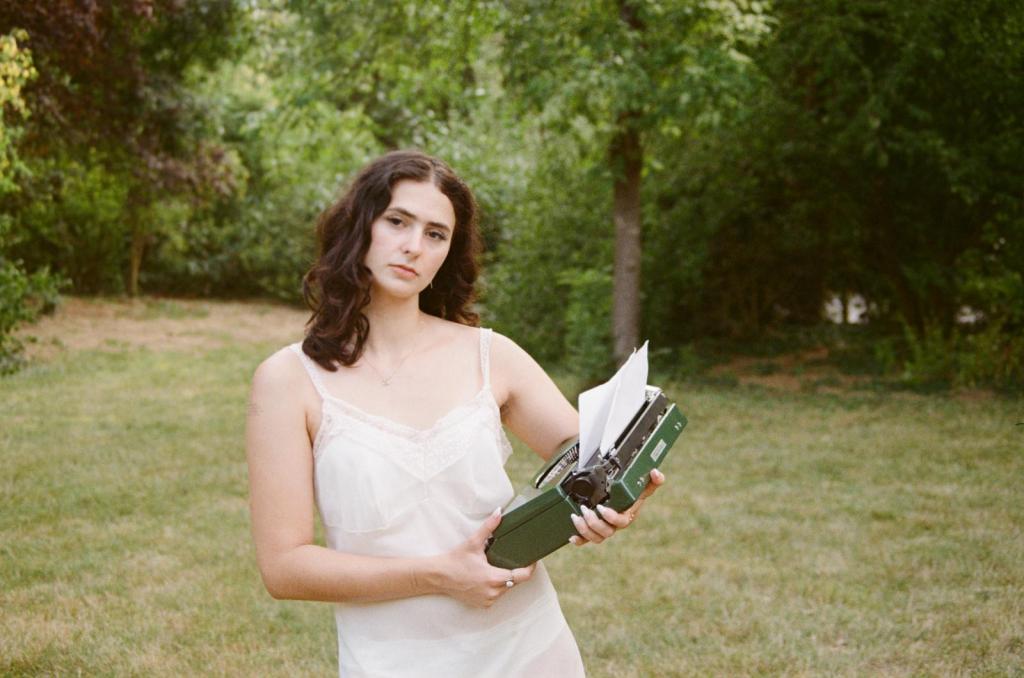
photo by Bella Cullen
How do poems come to you? How do you string words together?
Slowly, line by line, like water leaking in through a hole in the roof. I rarely seem to find beginnings that way, only middles and endings. I collect slowly for days, weeks, sometimes months. And then when the time is right, I sit down properly with the poem and give it its missing pieces.
You describe your poetry as a world we can step into. What does it feel like, smell like, taste like, look like? What is the general landscape you try to capture with your work?
It’s like checking into the Ritz in Paris under a fake name and imagining love affairs with people you see at the bar nursing overpriced drinks – and not taking any of them up to your room; instead, lying in bed smoking listening to Billie Holiday and wishing it wasn’t so cold outside, and thinking of all the people you’d sleep with and what good conversation you’d make with them if only it was July instead of January. It’s like pulling up to a motel somewhere in America, so tired you can’t even remember which state you’re in, and trying to air out your 1940s dresses on the bed because they stink of death, popping the pimples on your chin you got from living off of bad food from roadside diners, praying you look glamorous enough from a distance. It’s like disappearing into the bush in a white dress à la Picnic at Hanging Rock, leaving someone to find your shoes and wonder what became of you as all the insects sing and the air hangs low with Australian summer heat. It smells like mothballs, red wine, sweat and exhaust fumes. It tastes like honey, like stomach acid, like a preserved wedding cake. It’s going to the city and missing the country or going to the country and missing the city. It’s being crushed under the weight of desire, it’s recording chronic dissatisfaction. It’s the constant fear of being out on your own while knowing that all you truly want to be is out on your own. In other words, it’s as though you put Audrey Hepburn’s Sabrina in Thelma and Louise.
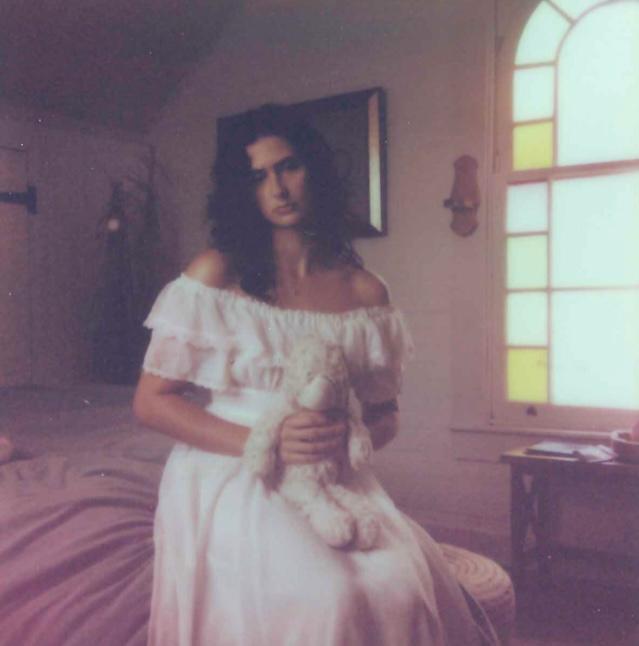
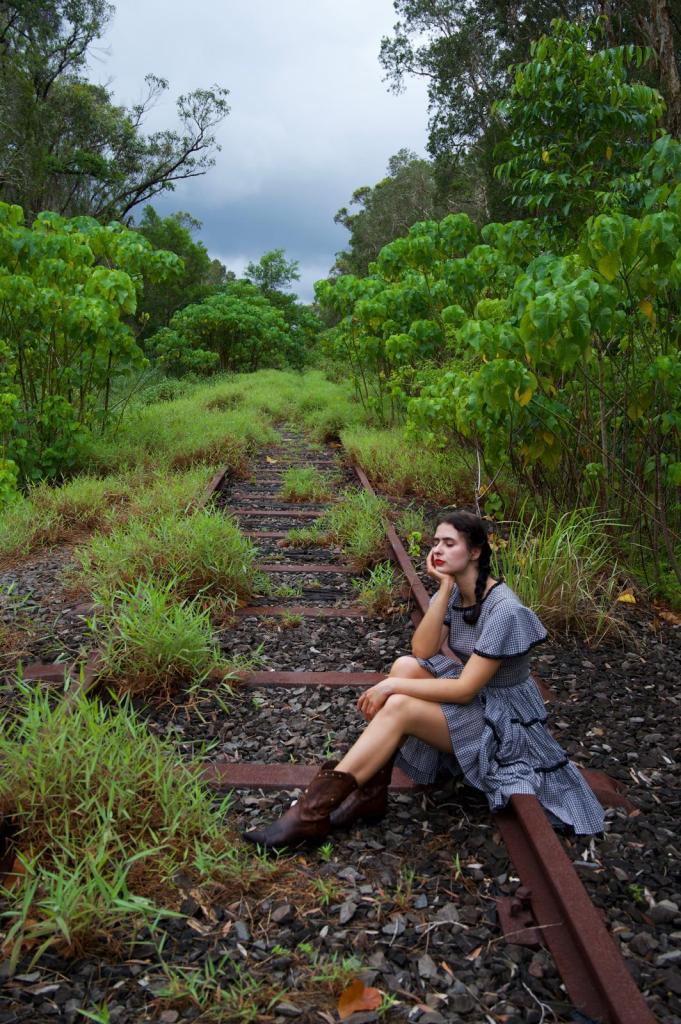
self-portrait by Giselle
I know you recently started putting some music into your poems, which you already know I love to do as well. How was/is that experience? How has that changed the way you view your poems?
It’s been so exciting to explore something a little different for me. It feels somehow more communal too; a lot of artists I respect and admire have been very generous in their offerings, and have lent me inspiration, or expressed their willingness to collaborate. My heart has been very full lately, everything has felt so natural. So far it’s been relatively informal – I’ve just been experimenting privately or uploading pieces to SoundCloud just to try things – but I’m in the process of creating something more official with my friend Walker who’s a crazy talented musician. I can’t wait to share more of that.
It’s nice to feel that a poem can continue to expand, even if the text doesn’t change. Sometimes publishing a piece has a depressing air of finality to it; getting to continue the work can feel like cracking open a time capsule. And as I know you understand, adding music allows you to further flesh out the world you’ve created. Sometimes it offers you a broader palette.
You perform your poetry quite often as readings. What is it like to share your work so openly primarily with strangers? What’s the best moment/realization you’ve had at these readings?
It usually feels easier to share the work with strangers than with people I know; I rarely have to admit to anything. The only exception to that is probably my friend Malina, who is one of my favourite people in the world and who I share pretty much all my work with, and everything else too. Recently I sat on the floor of her apartment and read her my diary entries from when I solo travelled in America for a month while she sat across from me and painted. Speaking of those solo travels, I think the best moment I had was when I performed with LMNL Arts in New Orleans. I remember sitting at the bar while they were introducing me and getting so anxious that I couldn’t feel my body, and I couldn’t remember how to breathe. I was terrified that if I got up to walk on-stage I’d just fall flat on my face. But the moment I took the mic off the stand, everything immediately slotted into place; it wasn’t that the weight had been lifted, but rather, that it was somehow channelled into a total singularity of focus. It was a beautiful night, I was so moved by the energy the audience brought into the room, which is perhaps what I had been sensing all along. I’ve never felt more like there was so much space in the world for all my intensity. I felt totally free to take up as much space as I wanted. Thinking on it now, it reminds me of a few lines in a Florence and the Machine song in which she exalts the act of performance by exclaiming, “Here I don’t have to be quiet/Here I don’t have to be kind.” It was a real gift. I had a rough time of it last year, and it made me extremely productive but nauseatingly insecure.
I kept trying to hate myself into being something better, and remained somehow surprised that it never seemed to work. I was in a play and would massively spiral out not only after every performance, but even after every rehearsal. The things that happened really broke my confidence. There have been good nights here in Paris too, but for whatever reason, that NOLA performance gave me back something I had been searching for. And it made me want to dig deeper. You could always be more intense.
You are very much a wanderer of countries, spaces, lives. How do different places affect your writing? What’s your favourite place in the world to write in?
I’ve always been fond of art that pays homage to a specific place; a city becoming a character in and of itself, or a poem or song named after a particular street. Munich, Winter, 1973 (for Y.S.) by James Baldwin comes to mind, which opens by saying, “In a strange house/a strange bed/in a strange town/a very strange me/is waiting for you.” I’m familiar with the concept of the unfamiliar, so this resonates strongly with me. Later in the poem, Baldwin writes, “my father said to me/It is a terrible thing/son/to fall into the hands of the living god.” My poetry often feels tied to physical spaces too, even if it’s not explicitly stated. For instance, I sent you a poem I wrote while I was in Savannah titled The Poem in Which We Do Not Make Love, which I envisioned as being set in a feverish, impossibly scorching combination of New Orleans and Cairo. I always want to translate a specific energy – I think I remember saying to you while we were together in the Tennessee countryside last year that it made me sad to know that no one would be able to stand where I stood in that moment and see that particular green exactly as I did.
And so as a result, I think I’ve spent the last year or however long it’s been since then becoming an unintentional chronicler of that green. The paradox of feeling like you don’t belong anywhere is feeling as though you might belong everywhere. I think there’s an underlying question in a lot of my work which is simply, What did I come here for? My roommate often asks what I’m hoping I’ll find when I speak emphatically of going somewhere without a real reason to do so, which is a great question, but it makes me realise I don’t have a response. It’s the act of searching in and of itself that’s sacred. Most of my writing feels to me as though it’s about the tension between staying and going, the ever-present desire to run away.
Speaking of that tension, my favourite places in the world to write in are hotel/motel rooms; strange in-between spaces. Those are my favourite settings too. When I’m not on the road, I just like to write at home. I’d love to be someone who sets up in a café or a bar but I get distracted and overstimulated too easily. And I’m a total homebody anyway. In that sense, I’m a woman of extremes – I either need to completely lose my head and disappear into spaces where no one knows my name and everything is new and different, or I need to be completely surrounded by what I know, seeing the same few people, going to the same few places I frequent, just generally being a creature of habit.
photo by Ashley Highberger
Tell me about how your other passions (fashion, acting, etc) interact with your poetry?
Being an actress, specifically on-stage, is an idea that tends to come up a fair amount in my poetry. The best example I can think of is the poem The Glass Auditorium from my recent collection, which is about being forced to perform until you quite literally fall to pieces – at the start of the poem “with shaking knees/I take the shaken laurel leaves/I take the stage/the triumph is never reached and is always the same”, and at the end “the last of me some torso some legs/parades for a room which hums like bees/one marionette arm raises after the other/death as the final strip-tease.” It’s natural enough because it’s a part of my life too, but even if it wasn’t, I think it would still show up in the work. Aside from Plath, some of my biggest inspirations when I first started writing poetry were Old Hollywood films and their stars. Recently too, I’ve been writing a prose poem that might never see the light of day, and it’s sort of about being in a show. I just finished a run of Chekov’s Three Sisters, adapted by Hannah Coyle – I played Irina, the youngest sister – and I’m so happy with how it all went. But obviously I don’t normally write happy poetry, so I’m writing a frenzied poem about how strange and unwell I felt in the weeks leading up to the show. So for instance, one of the lines talks about how I had this dream before the play opened that every person I’d ever slept with was sitting in the audience and none of them applauded at the end. My love of vintage fashion absolutely permeates my writing as well. It lends itself to wanting to create art that has a sense of something bygone, something nostalgic. There’s a ghostly quality to old clothes and old photos, or to knowing you’re wearing a dead woman’s shoes. It’s a feeling that’s almost everywhere in Paris too. I hope my words can be infused with some of those same wistful aches.
Write me your ideal epitaph
Let’s go back to where it all started and have something from Electra on Azalea Path – “It was my love that did us both to death.”
“Against you I will fling myself, unvanquished and unyielding” – Virginia Woolf, The Waves
Death and I have been intimately intertwined for as long as I can remember.
I’ve written and sung about it, studied it — asked for it.
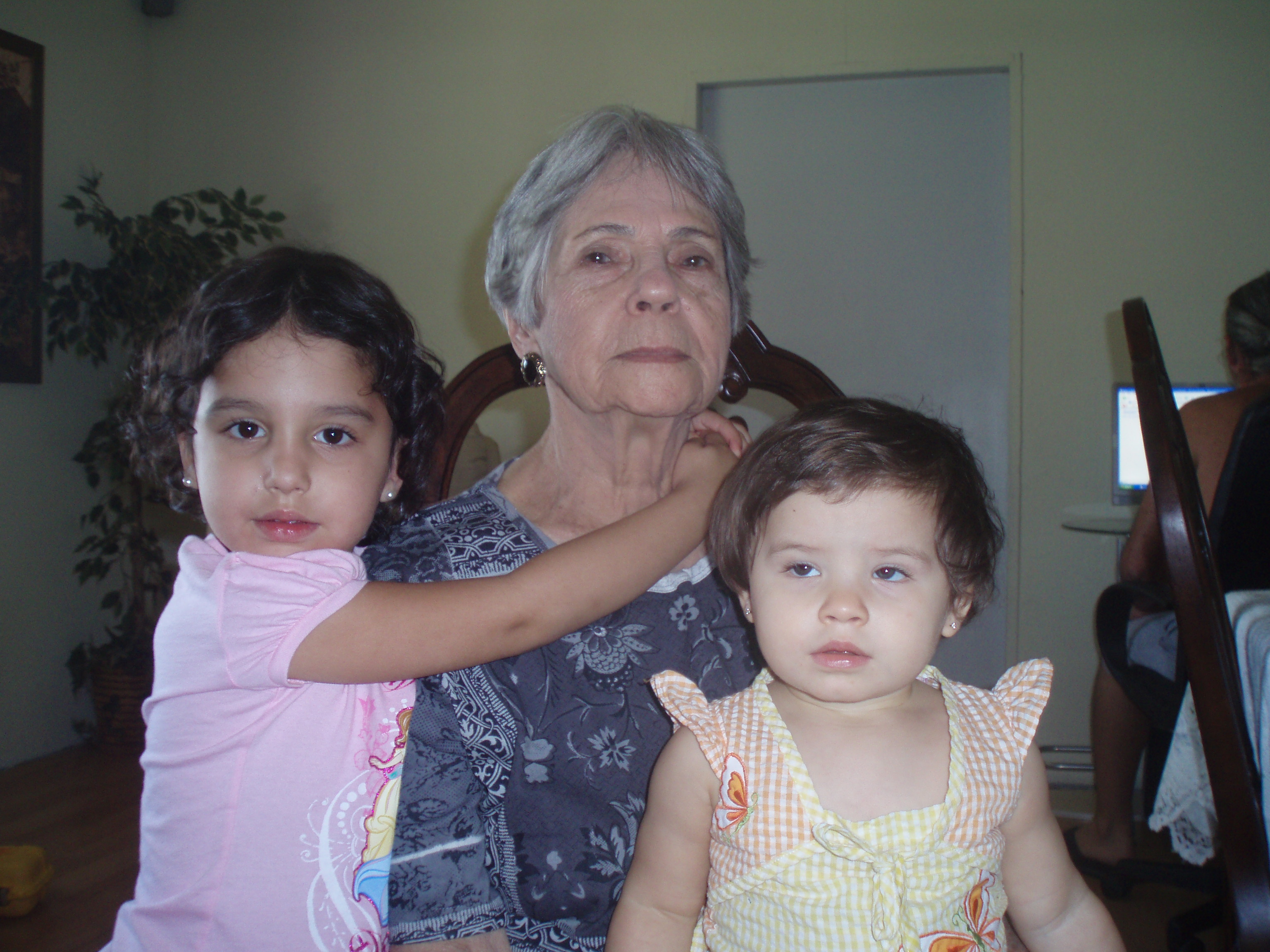
The first time someone close to me died, it was my great grandmother Beli, one of the purest souls I’ve had the pleasure of knowing. When I was small, I slept in her bed, listened to her stories, helped her finish crossword puzzles, brushed her hair. In return, she taught me how to pray, sew, and pay attention to the smallest of moments–like squirrels walking the wires of my backyard.
She also taught me love, unconditional and endless.
As she started the process of untethering (life will prepare you for death), she began to forget things, like where she placed her glasses, how to cook, even my name at times–calling me by my mother’s or my aunt’s.
She forgot everything, except how to pray. She could still pray the entire rosary.
When I got the FaceTime from my mother the afternoon she died, no words were really said between us. I knew from the expression on her face and the painting in the background —revealing Beli’s apartment—that death had come. That moment never ends in my head-it just goes on and on and on and on. No more holding her hand, no more of her stories, no more praying together.
Still, I didn’t understand death then–not nearly as much as I do now.
Exactly one year ago today, I came face-to-face with death in a manner which I did not expect. My father had taken a trip to Cuba to look after some sick relatives, and a few days before he was supposed to return, was hospitalized.
He was diabetic, which meant the risks were higher anytime he contracted anything. We had a bad feeling from the moment we found out. Still, I tried to hold on to my faith. I spent hours looking up his chances of survival as a diabetic man hospitalized under Cuba’s conditions. I tried to walk away the dark thoughts. I wrote. I sung. I prayed (something that I hadn’t done in years and brought me back to Beli).
I wanted to believe he would come back to me. Even in my dreams that night, I clung to that faith. I dreamt that we were in that hospital bed in Cuba together. I was tucked right under his arm like a small child, while we watched every moment we ever shared together play before us like a film—
until the phone call woke me. It was my cousin, the one my father was staying with in Cuba.
“tu Papa falleció.”
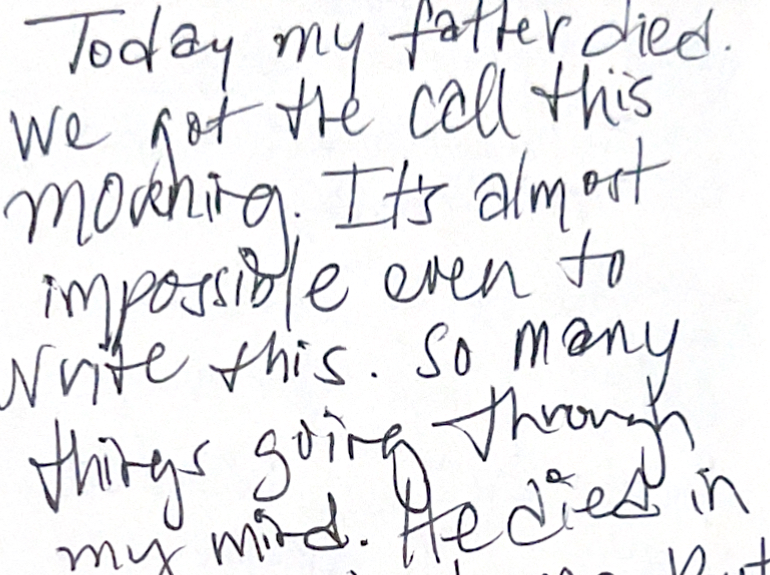
He died. My father died. He died. He died. He died. My sister and I stared at each other, trying to grasp at any words that might comfort us but none would do.
The silence filled—nothing else filled.
When we called my little brother into the room to tell him, his face lost all expression, too. I can’t shake the image from my memory. That initial moment contains a suffering so profound that it makes no sense to my brain at all but always, always gets a reaction from my heart. On our way home to our family (we had been on vacation with my mother), I somehow found it in me to journal and meditate in the name of loving awareness.
The sun had only just risen. The sky looked gentle and inviting. I couldn’t help but feel at peace, despite the grief taking root in me.
When my grandmother came back from Cuba (she had been with my father), I spent multiple nights sleeping in between her and my aunt. Our eyes were raw from the tears, our bodies: fragile shells of the people we once were; we could barely sleep or eat or even speak.
It was a very silent time for my family. There was a lot of suffering.
But there was also a lot of love, too, an abundance of it, really. I tried to exist in that space of light as much as I could.
I got my grandmother to share stories from her childhood with me to get things off her mind, we prayed together, had lots of coffee (something we did often with my father), and, desperate at first, were able to rationalize my dad’s death until we could finally accept it.
Eventually, I returned home to my own space. That day the sky was shedding itself completely. I stepped outside and let the rain wash over me.
I laid my body down on the dirt and listened to the sounds of nature’s outpour, then to my own heartbeat, over and over and over. It was almost like being held by my father again. I thought maybe the rain was some sort of message for my family, for me, that the Earth was grieving, too,
that “loss” is only a ripple into the sea of eternity.
A lot of what happened in the weeks that followed are hazy. All I know is that I tried to feel my grief as freely as I could. I tried to stop thinking about how I could’ve possibly been a better daughter, how I could’ve told him that he was the father figure we all needed from my aunts to my grandmother to my cousins to us, his three children, how he changed my life and continues to do so even after his death. The circumstances of the situation often made me go to dark places. I wished I had been in that hospital bed in Cuba with him like in the dream I had. I wished I had called him like he wanted a few nights prior to his hospitalization. I wished I had control over it, all of it, and don’t we all? But in many ways it was perfect how things happened. Maybe I didn’t need to see him in such a dire state. Maybe all he needed was his mother and the country he loved. My faith remained in me and carried me through the darkest night of the soul. Thanks to my trust in this life, I walked the shadows of grief with grace and on I will go.
I started college only a few weeks after. There were so many times that I would start tearing up during lectures or wish that I could tell my dad about my school day only to remember that I couldn’t. Still, I was full of joy. I was more grateful than ever. I couldn’t believe happiness was possible after such suffering–but it was,
and it is.
I’ve never feared death. I have craved it, studied it, honored it, even asked for it, but I have never feared it. Until my father died, I hadn’t realized that death was still nothing but a concept to me. Only once he died did I really start to fear it. I couldn’t stop obsessing over seeing everyone as often as possible because what if something happens and I never get to see them again? I started worrying about my health a lot, too, obsessively asking myself how much longer I’d have on this Earth. I even looked up my life expectancy. And keep in mind, I’ve dealt with suicidal thoughts since elementary school, so this was new for me.
Exactly one year ago today, my father died. Exactly one year ago today, the desire for death left me. I don’t cling to my suffering anymore; in fact, I try not to cling to anything at all. I can’t ignore the trials of this life, but I can’t ignore the blessings of it either. I can’t ignore that both are intertwined and necessary and wonderful in their own divine ways, even if sometimes I can’t understand quite how.
Since my father died, I have honored (and LOVED) my life like never before. I have gotten even closer to family, friends, and myself. I have witnessed newly found strength and faith in those that have grieved beside me. We have all become more grateful, honest, united, and more passionate about the art of living. It’s so strange how things work. All my father ever wanted for us was exactly what we embodied after his departure.
Now, yes, I will spend some of today in tears–but that doesn’t mean I will forget to smile or laugh or hold my grandmother or write a poem or dance around. I will hold the day with grateful arms, recognizing the harmony in it all, letting everything wash over me without expecting any of it to last–knowing that it won’t. Death is no longer just a concept in my mind. It is real–as is life.
O Death! not to understand nor tame you but to honor you in pure surrender, lest we wish to forget the living that precedes you, that would cease to exist without you.
A few of my personal resources for grief (though the best resource is within and around you):
+ I am here for you, too. If you are grieving or suffering in any way, whether it be spiritual, emotional, mental, or physical, my heart holds space for you, too, to crawl inside and make yourself a bed that you may rest in love and light.
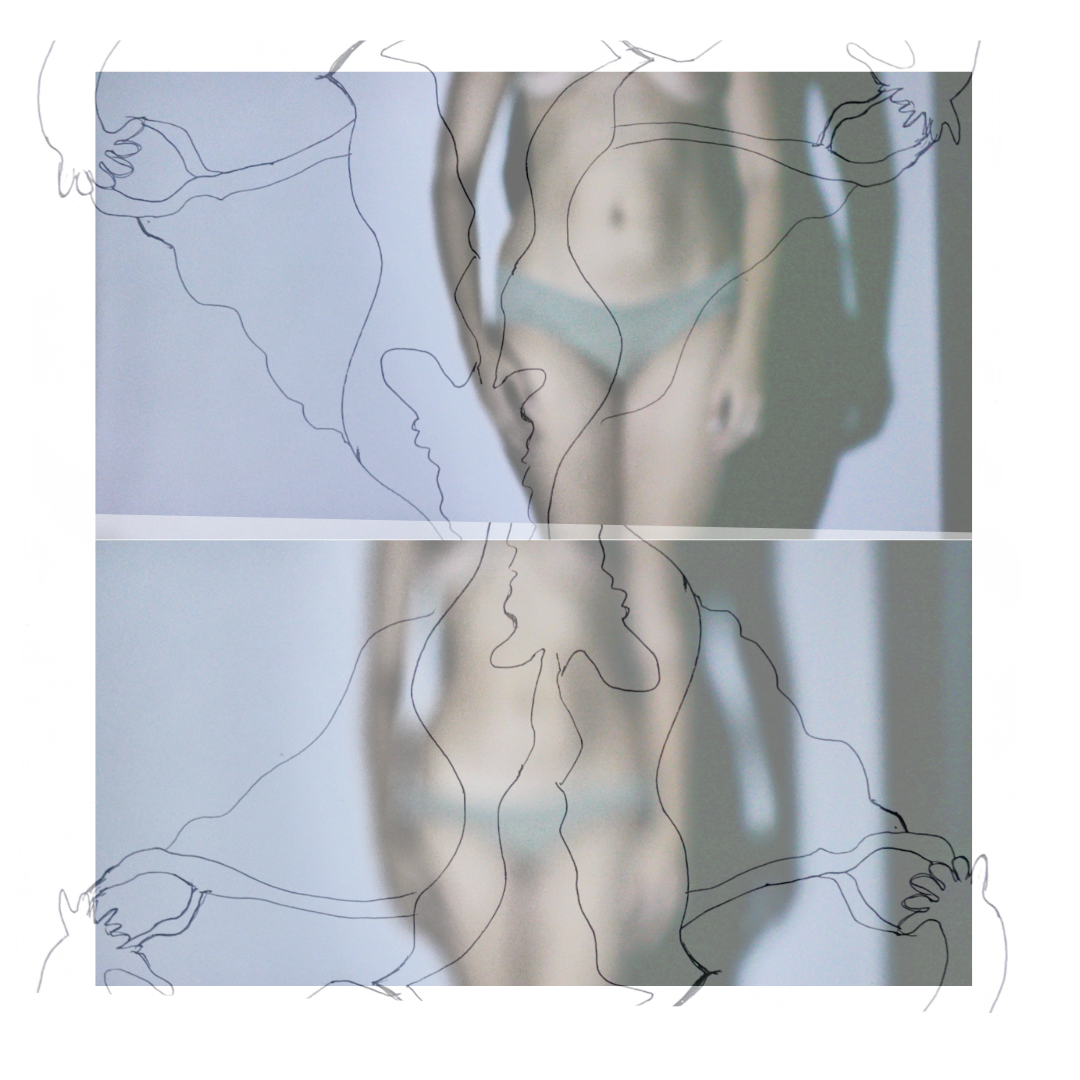
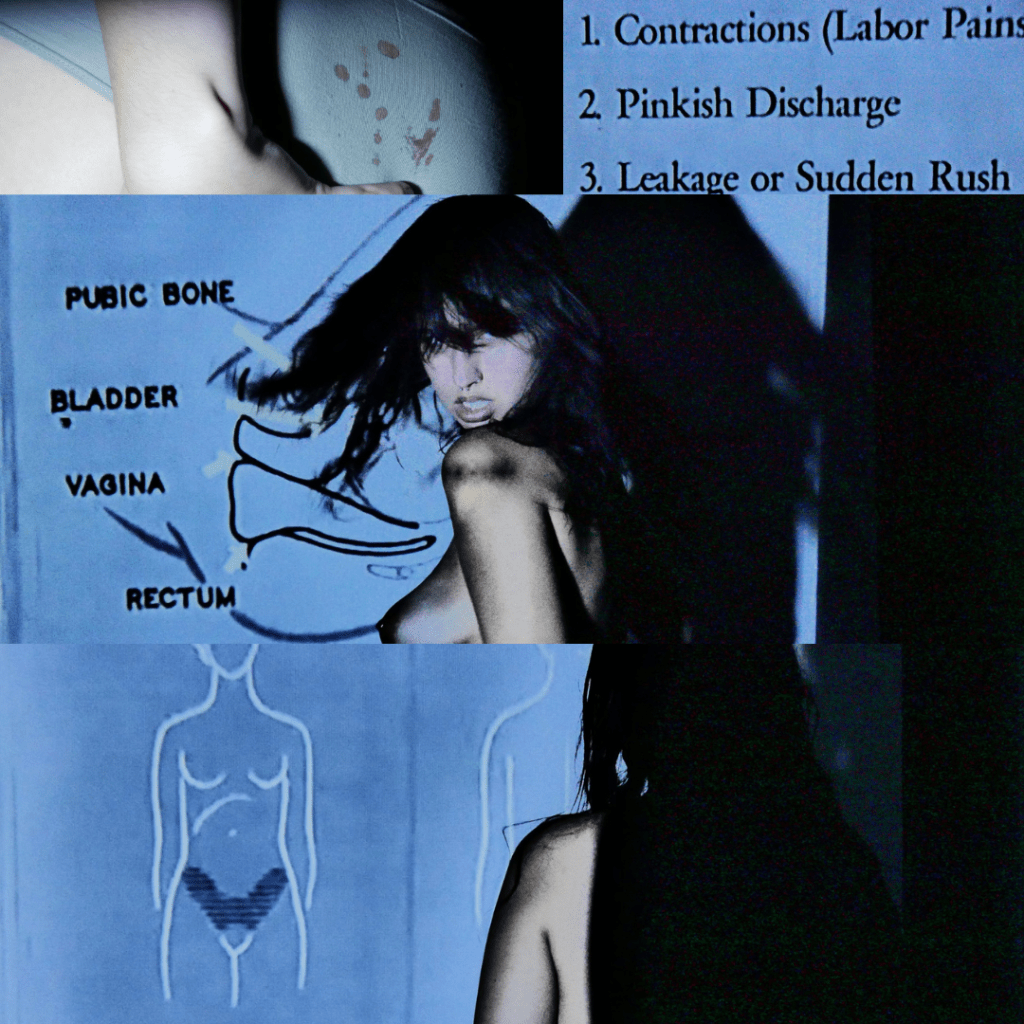
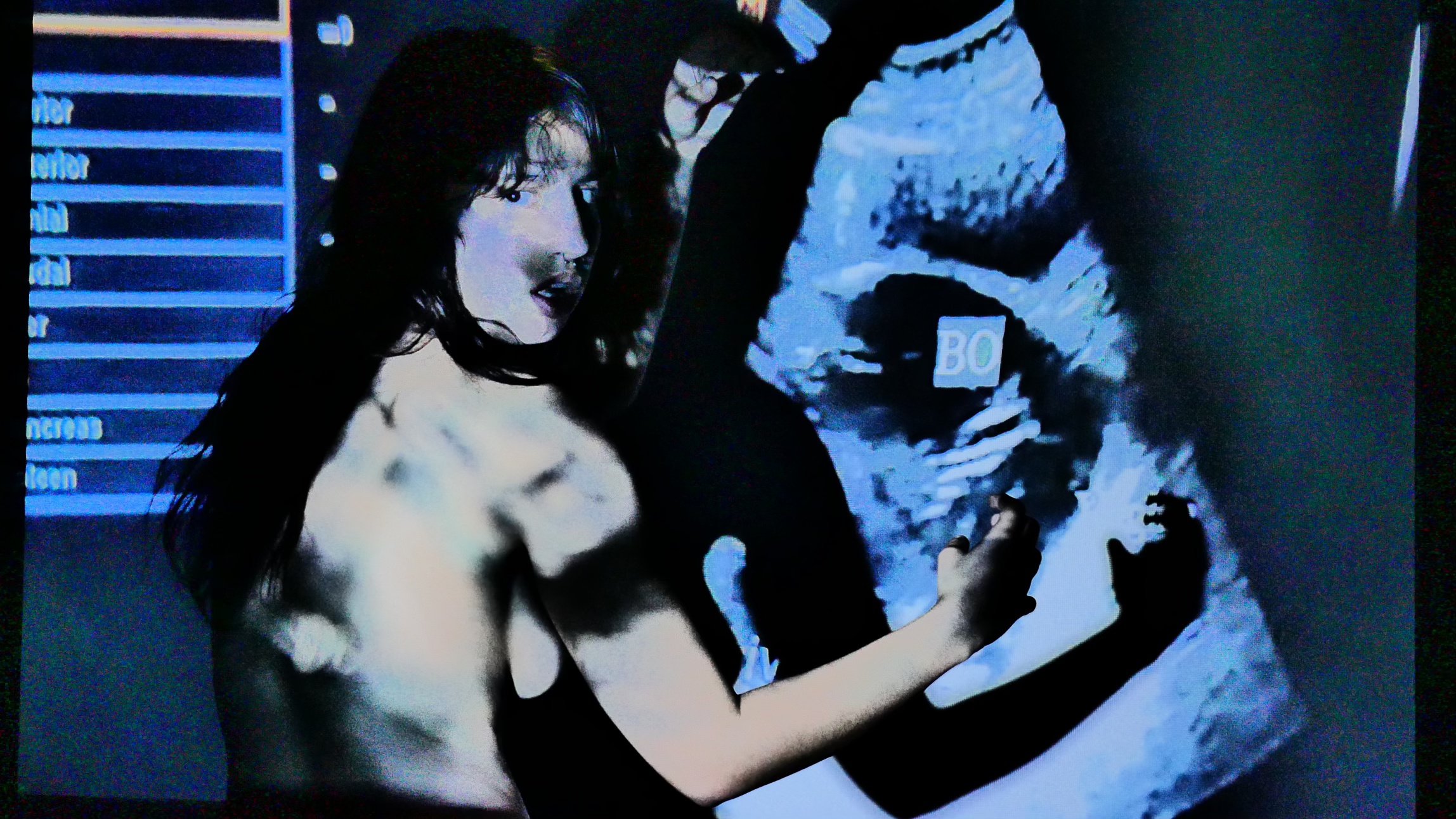
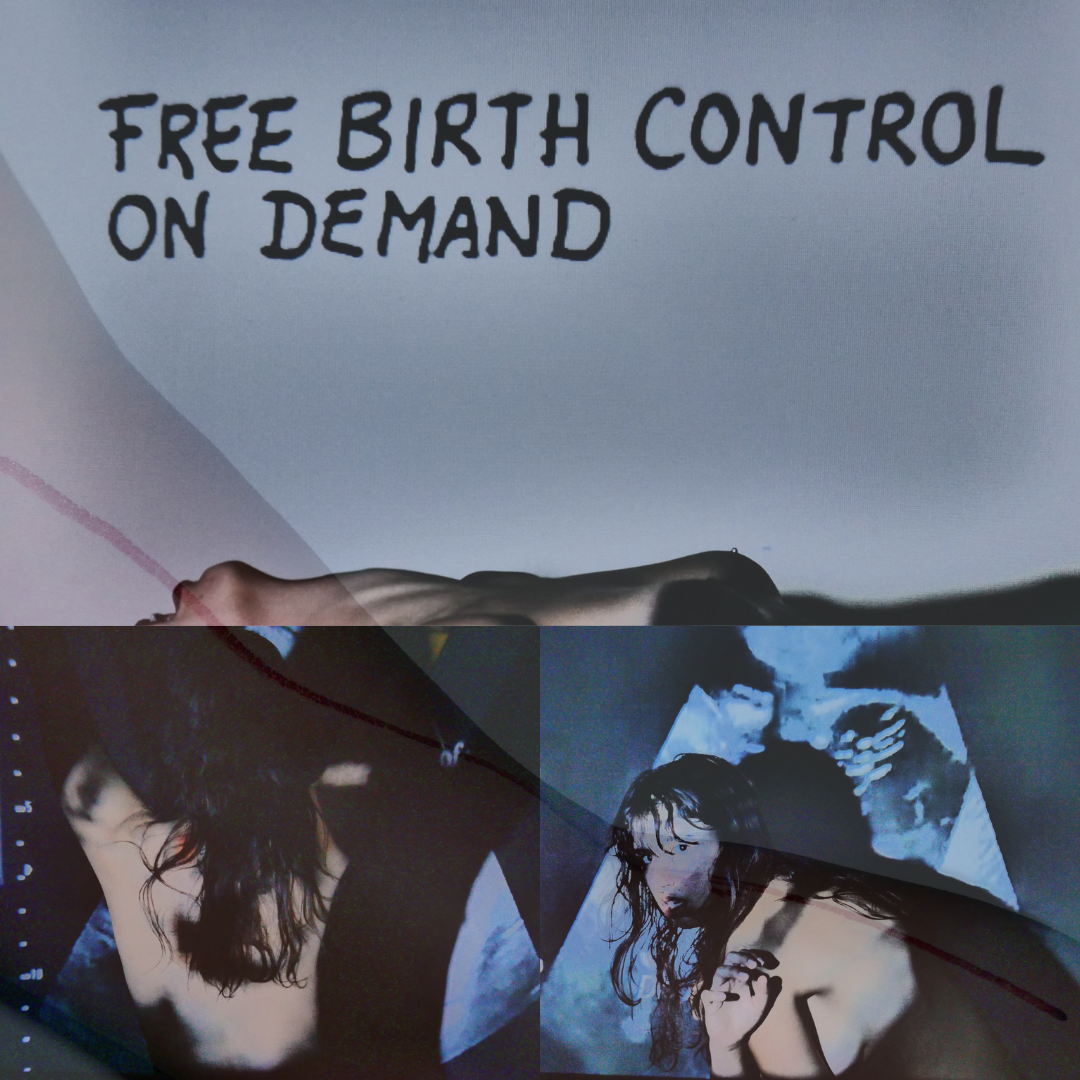
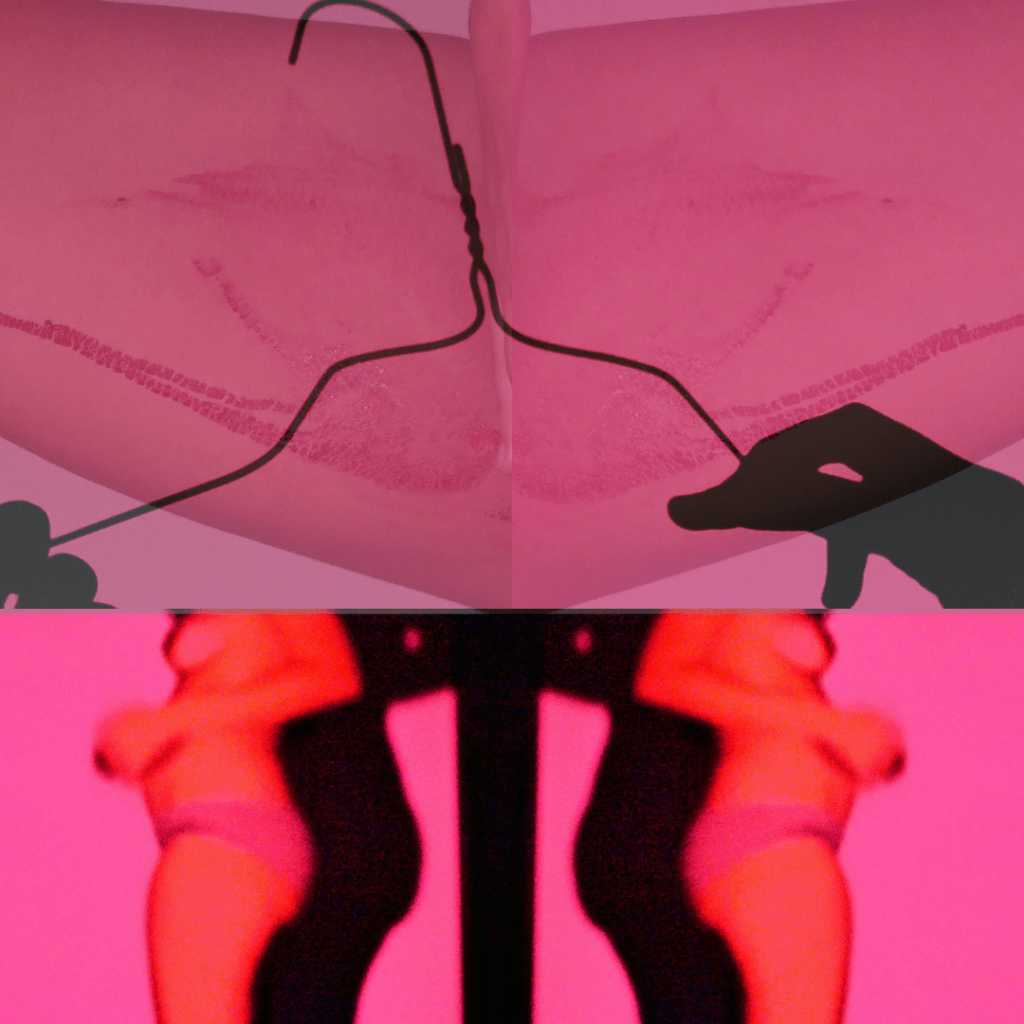
The question of bodily autonomy captured in the span of three debilitating–but necessary–days of shooting. This is my truth–and a truth that all women share. Always sacred, often enraging, occasionally akin to a crime scene: womanhood.
My (?) Body and The Wandering Womb
digital photographs with overlayed scanned drawing. both by Bruzon.
a photographic exploration of the ridiculing of the womb throughout history, as if it weren’t a sacred vessel–only a diagnosis of hysteria.
/
My (?) Body and Motherhood
projected images with overlays by Bruzon.
A woman’s duty is first to mother herself–and then, if she so chooses, to extend that motherhood to another being.
/
My (?) Body and Abortion
digital images with overlays and projections detailing abortion by Bruzon.
Realize that what you are asking is scars of my womb, blood that will traumatize generations to come. I will decide as The Creator under which circumstances to create. If you do not give me permission, I will give it to myself–and the blood will fill your streets.
/
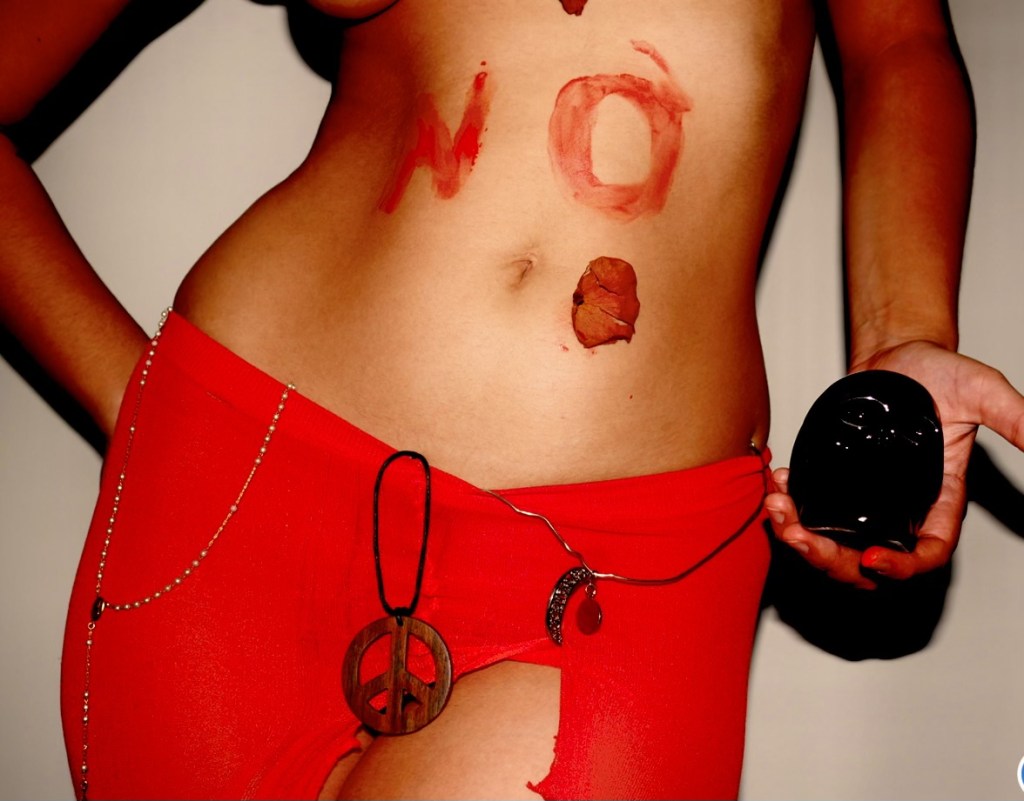
My (?) Body as an Invitation
photograph by Bruzon.
Just because I talk, look, or move a certain way does not give you the right to have me. The invitation is mine to give.
/
My Body
digital photographs by Bruzon.
I declare myself the sole owner of my body. I declare all women the sole owners of their bodies.
/
THANK YOU
To all women who are or have ever been. Your existence empowers me. Your history enrages but also inspires me. I dedicate so much of my work to you. These are not my stories–these are ours.
To my best friends for always showing up–from open mics to exhibitions, to helping me organize events, you have gifted me the power of true friendship.
To my little sister, an eighteen-year-old business owner (how do you like that, patriarchy?). My love for you is akin to that of a mother’s.
To my aunts and grandmother who in the absence of my father–and in all their grief–have continued to keep me rooted in the power of family. Without you I might float away.
To my mother who almost died giving birth to me and then again while raising me (I was the worst teenager). Mami, your love is the answer to most things.
And to the rest of my family and friends and all of you here today or tomorrow or at any point in my career. Your presence alone is a sanctuary for my art and myself.
Art is as much a conversation with the artist as it is a conversation with yourself. Thank you for showing up for the both of us.
/
FINAL STATEMENT AND RESOURCES
May “My (?) Body” serve as a reminder that there is still work to be done. Just earlier this month in Florida, a law prohibiting abortions after six weeks “with few exceptions” went into effect. Since the overturning of Roe V. Wade, we have been living in a very Atwood-esque country. Here’s an Interactive Map of Abortion Bans Across The U.S. and a Resource for Abortions as well as The Suicide & Crisis Hotline because I know sometimes it gets to be too much. You are never on your own. I am here, too. Thank you again.
Register to vote, if you haven’t already. You can do this from your bed. Registration is the easiest part of voting. Do it now, and next time you can show up!
DO YOUR RESEARCH. Know who and what is on your ballot. It should only take you a moment to do this. Please show up prepared. An uneducated vote is just as bad as no vote. And we have every resource we need at our fingertips, which means that there is no excuse for ignorance when people’s lives are at stake.
Now that you’ve fed yourself some knowledge, find your polling place! There are many sites that can tell you this info. Here’s one of them: https://www.vote.org/polling-place-locator/
Get up from your bed, dress that human suit, and GO VOTE.
If you need help with any of these steps, reach out! I am here for you, as are many others. You will feel so good walking out of that polling place knowing that you used your voice.
NOW LET’S TALK…
I don’t want to spout some “liberal” stuff at you because I don’t care for the label “liberal” anyway. I’m a human being who cares about other human beings. That’s it. I want to encourage voting for candidates who care about human rights.
It’s easy to forget that the most important thing we have in this world is not money but each other. Ok, you can provide me financial stability! great! but can you fight for my rights and the rights of others? No? Then you lose my vote. Simple as that.
Earlier this year, we faced abortion bans that have brought us back so far I’m terrified for the future of women. When I found out that Roe v. Wade was overturned, I spent weeks in bed crying, researching, writing, trying to make sense of things. This is an irreversible hurt. I will never stop hurting for myself and for the women in this world. How could this happen?
And I’ll admit, I haven’t done all that I can about it. I vote. I’m voting tomorrow. I speak out about hate. I research all that I can so I can provide facts to those less educated on the subject. I identify my own biases, my own ignorance. But I haven’t done all that I can about it. It’s easy to forget what’s going on in the world when it doesn’t directly affect you. Even though the bans technically do directly affect me, I’m not pregnant right now and unable to get an abortion, so I’m able to ignore it, to live a life where those bans never happened.
When something is happening in real time, when the news articles come out and everyone’s posting about it, it’s fresh in your mind. You feel the anger & intensity of it. But eventually, that intensity fades & we move on. Some people move on for comfort, some because it is too painful to linger there. Same thing happened with the BLM movement. So much hurt in the moment, and yet so much silence after.
I don’t want to move on. I don’t want to remain silent. I want to use every moment I can to help, to remain aware of what’s happening because if it’s happening to another human being–it’s happening to me.
It’s happening to all of us. Or are we that unbothered by the abuse of others? or are we that unconcerned with the wellbeing of the people we share this life with?
In Florida, on July 1st, a law banning abortions after 15 weeks took effect. It’s happening here, too. This isn’t an Atwood novel, though it might seem like it! (that woman is psychic). This is real life, and it’s happening right in front of us.
And yeah, these things can be discouraging for voters. It might feel pointless to vote when at the end of the day, things like these happen. But this logic is flawed! Apply it to anything else and see. Just because your art might not make you money, are you going to stop making it? No. Just because loving someone might end up breaking your heart, are you going to stop loving? No. One day we’ll all die, so does that mean we should quit living? No.
Voting is a privilege. People fought for our right to vote. It takes a few hours (or less) of your time to register, research, and show up. PLEASE don’t take it for granted.
My parents were born in Cuba, where they spent half of their lives silenced by those in power. Voting was hardly a concept, never mind free speech. Speaking up meant risking their lives.
We’re much luckier than a lot of the population.
So protect others as you would protect yourself. If you’re able to have a voice, use it. If not for yourself, do it for others. Even if you think it’s meaningless to vote, even if you think it makes no difference, even if you’re not a woman, even if you’re not black, latino, gay, VOTE AS IF YOU WERE.
Art has followed me for as long as I can remember. It is the lover that comes in though my window at midnight. It is the baby that whines all night in the crib until I put it in my arms and sing it to sleep. I can’t choose something else, even if I wanted to. That’s the thing: art is like a seed inside each of us. Within most, that seed lays dormant and sprouts every once in a while when asked. Within artists, that seed rages, unasked, untamed.
As a little girl, It first manifested as a love of reading and writing. I learned English my first year of grade school, and I quickly became the best reader in the class. Nothing excited me more than walking around the library in my school. Nothing inspired me more than those three books I could check out every visit.
Come middle school, It rushed right out of me and grew into journal entries and monologues and scenes. Those were the worst years of my life so far, and my love of art got me through it. As a young artist, you constantly feel like you’re born wrong. It’s like everyone around you has substance inside of them whereas you only have a void. Art fills that void, but you haven’t learned that yet, so you just feel aimless. You try to pretend other things interest you, too, so you can fit in with everyone else. You pretend and pretend and pretend until you can’t anymore.
My whole life I had gone to “normal” schools. Come high school, I decided to go to an art school. I spent four years surrounded by the most creative minds around and made films, started a poetry club (one of the most rewarding projects of my life), wrote and directed my own theatre show, and got to constantly nurture that seed. I no longer felt the void as much because it was filled with love, with creativity.
Then, I graduated high school in true oldest-child-in-need-of-validation fashion: with an IB diploma and a strong GPA. I was headed to SCAD in Savannah, Georgia. I was leaving my home state, finally. While my dad drove, I sat in the backseat with my acoustic guitar uncomfortably jammed in between my sister and I.
But I didn’t know if I would be staying in Georgia. I didn’t know if I could afford SCAD. My parents couldn’t make me any promises as far as funding went. I was going to study performing arts; what if I started a career based in uncertainty with tons of debt?
So, I met with the financial aid office and decided to put a wait on my decision (extend my application through the fall term to the winter term). But I’m not sure it’s worth the debt to put myself through the educational system again.
I felt immense shame coming back home though. As an artist, a fear of failure constantly lingers over your mind. You’re told that your path is unstable, among other things. We grow up feeling alienated. We finally find the thing that makes us feel like our authentic selves. And then we make other plans for it because others tells us that it’s not practical.
We make plans for ourselves. We set standards and tell ourselves that we’ll get somewhere if we just get in line. We try to make sense of the gift, but the best part of the gift is that it makes no sense. Originally, I didn’t want to go to college, but I made myself pick a pretty plan that would make my life as a young artist into something digestible.
But the truth is that life is not going to be simple. Life as an artist especially won’t be simple. It’ll take the kind of self-evaluation that most people can’t even imagine undertaking. It’ll take guts and an abundance of patience and love for the craft. I’m not going to wake up with everything I want–and why would I want that anyway? I love the process, the in-between: staying up all night because my soul has things to say, creating poem after poem, song after song, film after film, and never expecting anything out of it because expecting is not the point.
And this strange and often frustrating in-between is often where the true living happens to us. And the art follows the living and vice versa.
People will tell you that you have to make it big to be a big deal. Nothing about that statement is true.
Who I am, who we are, despite what society tells us, is a big fucking deal.
And I might still go to school eventually. I still want to make my Cuban family proud with the diploma that they could never get for themselves.
But I’m not going to be a doctor. I won’t sit at a desk all day. The seed won’t let me. It rages, still.
And I’m not going to do anything just to check some boxes, especially when they’re not even my own boxes to begin with.
This is life as a young artist. You break more than your peers do. You have to come to terms with the fact that your path is vastly different than the path of those around you (and this is true for everyone, not just artists). But especially for us, things will be up in the air all of the time.
Remember: others can’t see the seed unless you show it to them. When you’re still young and exploring, it’s all about trusting yourself enough to commit to it and watch it grow. In the end, we have no choice but to let the art keep speaking lest we wish to deprive ourselves of one of the most beautiful things in this life (how lucky are we to be the called ones?)
Earlier this year, I had the kind of intense mental breakdown I used to have in middle school almost daily. It hadn’t happened in a while, not to that degree. I had to seek medical help for myself. After I was feeling better, I got calls from my family members every day.
On one of those phone calls, a family member told me that I should “maybe take a break from the art thing.” They had good intentions, but my face heated up fast. They figured the art was somehow the root of all my distress. They couldn’t see how art had saved me. They even referenced famous artists and their tragic lives and deaths as reasons why I should stop.
“People who make art go crazy,” they said.
“If I stop making art, I’ll die,” I responded and hung up the phone.
        1
(I do not wish, I ask)
if ever there was a desert in your chest
that I could catch
fast–
your
wind
-driven
sands
at my feet

wisdom,
the texture of pulp
when you speak–

I pick at my teeth.

I don’t want to get involved.

we identify foreign species
and collect bark for the pocket of my overalls

we
mix our names
we
mix our lives

my wild horses
rapture through
meshes of golden light
and
you stare at me
with all four eyes–

but all willingness eventually dies.

I don’t want to get involved.

there are no new things that we can
say or do—

we were born in
tailored,
cast-iron suits
and
deemed carbon butterflies

bound to journey through
bolted clouds.

and

love
is
a busy thing
to
think
about.

its wire snare
comes strip me bear
to my grief
until
I stand above/beneath everything
that ever was
and I must let it take me.


I want to show you the place
where poetry is made,


but you are preoccupied.


               2
while in another part of the world,
day is not day, but night—and my
family is starved of food
and light

and lanterns are placed by
a single bed sleeps three,
bodies strapped to the mattress,
packaged like sardines.
and they prepare to tell each other just how long
they are allowed to sleep or dream
to measure the
pertinent now
that
sssssssssssslow
touch
the fan goes on and off
and I wake up

at three in the morning

to stuff jazz music into the cracks of the ceiling
and light a cigarette on the steps to the room where I slept that stinks of death.

insects fill yesterday’s pants.

I undress my hands,
that they may dry–
still, impure.

My country is a river of blood that swallows the shore.

last night I kissed my father’s beard–
today I powdered his bones.


              3
and how did he slip past that spiral staircase with no railing? he couldn’t come back in time didn’t trust me to catch him fine, it’s raining but never enough to tear through the heat
still I tear in two when I think of you. I think of you father think of you lover think of you mother
think of a thought to keep me thinking outside of myself.
because it could be worse
so it is never bad enough.
trust makes me blush! and I never might trust
you believe in time nor move through this life with anyone by my side and I want out already I want out
because you underestimate my aversions
because everything has happened and at the same time, nothing, and you have just arrived and are changing everything and I like my things in order, I dust that glass menagerie and listen to you tell me how one and two become three.

and I want to get involved with a love that is now impossible.


             4
and yet, you make such offers,
like laps of waves,
I hear the silver ripple
ping,
ping.

I want the white fence
no ring
my head in the oven
preheating,
preheating–
but you break in before I go Plath
in our one bed, one bath—
am I here to
remind you of the people that you loved before?
to never leave ourselves,
to never leave them,
to never know
who built the roads
or
what
gets
us
through.

you remind me
(so blue)
that
what lies at my feet
will someday lie me down, too.
someone who tends to my ailments, buildings on fire with laughter, the night is a flame,
however you choose to need me– however, you choose.
I give you what remains: my toolbox of blues, soaken silver shoes that walk on water and hover over Earth oh let me hover over you and
live a little longer than I’m used to giving birth to
songs in silence–I don’t believe in time and still, it never ends
a dock in the dark in the sand by the water, a raccoon mother and family.
Don’t talk, I hear what you’re telling me.
I’ve never been looked at like this before–
to stay still can’t cure how you have opened me.
And you have opened me, tires burnt out. Apocalyptic, really—
asphalt-soaked rubber floor, left alone, run away and after it.
So what if the land explodes and takes us swiftly?
I’ll be glad we were together, even briefly.
I gather my possessions neatly and scatter them on the floor before you
help
help
me never knew you were the dog to flee
help me.
If only we would all scream brazenly to each other across bodies of water
the kind of certainty that only an animal could offer
cigarette in your mouth that we pass back and forth like a CPR of sorts you give me such freedom that I forget I must protect myself
………………………………………..
A MAN INTERRUPTS US
………………………………………. what we thought was a shotgun in his hand was a subconscious recalibration makes us proclaim our brewing love in reference to a God above and if there is one, if there is one,
we should keep going until we know.
And when the past begins to show, don’t give it away. Deal me your worst–
let it walk behind us stalk behind us talk behind us.
We have known such truth in the timid time we have spent–
the certainty we feel could turn an animal on its head.
But when my plea for less has proven incorrect and I bloat with light,
don’t you think that we could live together?
When the firmament has cracked in two and the yolk sun seeps through,
we could take a sabbatical.
Picture fervor at the dinner table, no murmurs–high voices– slices of good fortune.
You’d lick the lot and say, It is not golden–can I hold it (and forget to give it back) to stand there, wanting–for once– the things that stay.
When you look at me, my world breaks in the familiar way.
And oh, to reach out and– never never never– I dream lands that we might inhabit together followed by a jaded waking to giving/ taking hands, the thing that you could say to make it better plans to be silent silent silence THE END.
It’s too bad. I like the noise you make
when you take place for me
our cotton ceiling caves in and I can see plasma,
though the clouds are clad in silken fire, silver-cuff shackled through and I can’t reach all there is to say— so I hum a witty phrase and ask that you
listen past it.
My veil is made of chiffon and cowardice, enough to live with, enough to know that
illusions are a fraction of the truth.
And you feel real (which is to say) you are the illusion that has offered me the most–
the soil that plugs my ears, the noise that I am in debt to LAUGHTER TO SWEAT from sleep to wake TO NOT FORGET you–
The exhibitionist nature of theatre is irrefutable–the role of performer being akin to that of a prostitute. In the act of stripping oneself, metaphorically or physically, before a crowd of strangers, a transaction takes place. Such a transaction can be seen repeatedly throughout history but observed in the most literal sense with the female performers of 19th century Japan. These women were banned from Kabuki theatre in the 1800s, only to return the next century and find that there was no longer a space for them in the art form. A propagator to this would be The Male Gaze and its implications for the women of Japanese theatre and the audiences that attend them. Last is my theory that theatre can be likened to a sexual act and thus easily find itself interlinked with the world that prostitution exists in. In the end, we all want the same thing: to be seen. In this paper, I will delve into the interconnections between prostitution and theatre, beginning with its implications for the performers of 19th century Japan, followed by its roots in the male gaze, and the sexual nature of theatre.
In the late 1800s, after Japan popularized it, women were banned from Kabuki theatre. Ironically enough, a woman named Izumo no Okuni and her performance of combined dance and song in 1603 was thought to be the origin of the art form (Marina). Though women were banned in an attempt to separate prostitution and Kabuki, male performers were still involved in prostitution; in fact, both genders were equally sought after for commercial sex in this era. In the Edo period, “theatre owners saw prostitution of their boy actors as a way to garner favor from powerful or wealthy patrons” (Birk).
Desperation and passion are two sides of the same coin; both can and do coexist. The women of this time were struck with limited options, for “up until the outbreak of the World War Ⅱ, women…could either become a servant, a prostitute, a geisha, or get married” (Ryall). There was no way to escape their predicament, the interconnectedness of performance and prostitution. After all, artistic work is not sustainable unless the people want to look at you, hear you, and often in the female performer’s case, sleep with you. This is a predicament that I face myself, as a female artist: though I may not mean for it to be this way, my work tends to come second to my sex in the eyes of the industry. Instead of trusting collaborators, I have to be vigilant that they’re not exploiting me as a sex object. In the 1900s, women were able to return to Kabuki, but the majority never did. To this day, it remains a male-dominated art form.
This leads us to the concept of The Male Gaze, a term coined by film theorist Laura Mulvey. Traditionally, in life and in art, woman is the one that sells–and man the one that buys. The Male Gaze refers to the phenomenon of patriarchal standards lingering in the minds of women almost subconsciously. They are never able to liberate themselves enough to overcome the eyes, the expectations. This can be seen in the art that they make, drawing a parallel to sex work, where women are made to appeal to The Male Gaze in order to make their living. In Japan, this, too, is prevalent because “the roles that are made available to women overwhelmingly call for a passive subject, rather than women demonstrating agency and control” (Hambleton). So scarcely is woman the observer–so often is she the observed. In this way, she becomes an object, a fantasy, much like a prostitute–much like a performer. In A Room of One’s Own, my favorite writer Virginia Woolf addresses her female audience with a permeating question: “are you aware that you are, perhaps, the most discussed animal in the universe?” (Woolf 26). Woman is the ultimate muse and thus, the perpetual object of affection–which makes her a natural performer but also, a sacrificial lamb. Whether she is a prostitute, a performer, or both, she faces this predicament–a bridge between the acts, a shared sentencing.
Finally, I posit that theatre is a sexual act–not necessary in the literal sense–but spiritually, emotionally. If discussed within academic parameters, it is comparable to some of Sigmund Freud’s theories on sex. Freud’s theories consider the idea that creative acts stem from a sublimation of sexuality. He believed that human beings are driven to break out of the cycle of life and death and that only this perpetual excitement and tension can keep them tethered to the continuation of life (Zupancic 99). Sexual drive is different from pleasure here, too. Pleasure requires the audience, the other. Sexual drive does not; it exists independently within the One self. Upon performing, the actor is interacting both with that part within them that seeks the other and the part that needs nothing except the release of expression in itself.
Sexual energy is creative energy, creation is both life and death–and our existence is wrapped up in all of it–a big bouquet of intensity! Theatre is the release of that intensity. Only through the proper channeling of every facet of the performer through their character can the work be felt at the most profound level. True work requires nakedness; an actor must be willing to let the audience see through their character into the part of themselves that is everything, that is unique and yet a ripple of everyone that has ever been. In front of a stranger, this is the prostitution of the soul.
Human beings are intricate, from skin to consciousness. Within the theatre, these intricacies only expand. Art asks the limitless of us. It asks for the kind of rawness that peels us until we are bare. Such expression must be unflinching–and the creator, just as willing as their creation. Art is entering a dark space as a small child would–but with the wisdom and daring that comes with age. There is something primal about the creation of art and in the case of theatre, something that strips. In 19th century Japan, women had little freedom and dealt with the aftermath of being barred from the theatre of the time due to their affiliations with sex work. The history of the interconnectedness between theatre and prostitution is vast. It cannot be contained in one simple analysis and must be examined from a range of perspectives. It brings about questions of social order, the role of women in the arts, their internal conflict and societally-influenced disposition, as well as the very nature of theatre. It is not that theatre is prostitution nor that prostitution is theatre, but that a parallel exists between them–especially for women. To be an artist is to think transactionally about your very soul. Like a prostitute selling sex, an artist sells their own self for a singular moment of ecstasy, of unity with their audience–with the world.
Works Cited
Birk, Sara K. “Sex, androgyny, prostitution and the development of onnagata Sex, androgyny, prostitution and the development of onnagata roles in Kabuki theatre roles in Kabuki theatre.” Scholar Works, 2006, https://scholarworks.umt.edu/cgi/viewcontent.cgi?article=4556&context=etd. Accessed 30 March 2025.
Marina, Andrea. “Kabuki Theatre: Queer Cultures in Early Modern Japan, Part 2.” Andrea Marina, 2024, https://andreamariana.com/?p=1434. Accessed 30 March 2025.